Laboratory Animal Management: Building Better Rodent Research Workflows
Laboratory Animal Management: Building Better Rodent Research Workflows
TL;DR
Laboratory animal management connects daily care with the people, procedures, and records that support a study. For mice and rats, the practical goal is continuity: the approved plan should remain clear as an animal moves from housing through a procedure and recovery. Reliable identification, defined responsibilities, and usable records help the team maintain that continuity.
The experiment includes the handoffs
A procedure can be carefully planned and still leave the next person with an unanswered question. Which animal has already been assessed? Who is watching recovery? Where was the unexpected observation recorded?
Those gaps are management problems with consequences for both care and interpretation. A sound workflow makes the next action clear to the person responsible for it.
Husbandry provides the foundation of animal care. Laboratory animal management also connects that care to the research schedule, equipment, personnel, and study record. The aim is a system that people can follow throughout a working day.
Start by following an animal through one planned procedure. Look for the points where responsibility or information changes hands. Those are useful places to test whether the written plan matches the work.
Give each responsibility a named owner
A shared responsibility works only when everyone knows who is acting next. “The team will monitor recovery” leaves more uncertainty than a clear assignment and handoff.
Define which activities belong to the research team, animal-care staff, and veterinary staff. Where responsibilities overlap, agree on the point at which information or care passes to another person.
Coverage matters as much as the normal schedule. The plan should explain how staff obtain help when a concern arises outside routine hours. Contact information and escalation instructions need to be available where the work occurs.
The institution’s animal-care program provides the governing framework. Under PHS Policy, veterinary care and appropriately trained personnel are part of the requirements for covered animal activities. Local policies translate those requirements into the procedures your team follows.
Connect the animal to the correct record
Individual identification keeps observations and procedures associated with the intended animal. That connection should remain clear when animals change location or staff change roles.
Choose an identification method that fits the study and the institution’s requirements. Then define when identity is checked. A reliable method cannot help at a point where nobody uses it.
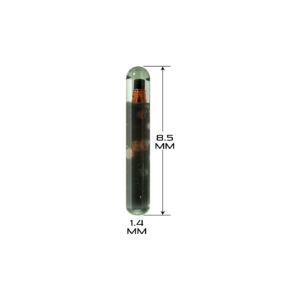
RFID offers an electronic rodent identification option. A compatible reader retrieves the animal’s code, and supported software may transfer it into a record system. The RFID range provided by Kent includes unique identifier (UID) options that support identification and temperature-sensing configurations.
The management question is how that information enters the next step. Confirm that the code selects the intended record and remains attached to the observation or measurement. Establish a response for an unexpected scan before it occurs during a study.
Keep this decision proportionate. A lab does not need to replace a working identification method simply to modernize a checklist. It needs a dependable way to confirm identity at the points where an error would matter.
Make housing changes visible to the study team
Daily care and experimental work should share the information needed to interpret the animal’s experience. A housing change should not become a surprise discovered after data collection.
The facility establishes appropriate housing and husbandry practices. The study team should identify which changes need to be communicated and how that communication reaches the people scheduling or performing procedures.
For example, agree on how a room move or a relevant health observation enters the study record. Recording an event does not mean declaring that it changed the result. It gives the team information with which to evaluate the result.
Keep the record useful rather than exhaustive. Document the event clearly enough to understand what changed, which animals were involved, and what action followed. Avoid burying an important observation in an unrelated maintenance log.
This approach also helps distinguish a planned variation from an unexpected one. If a study intentionally changes a condition, the people responsible for daily care need the approved instructions.
Treat handling as part of the method
The way an animal reaches the procedure station can matter to the study. Handling should be chosen deliberately and performed consistently.
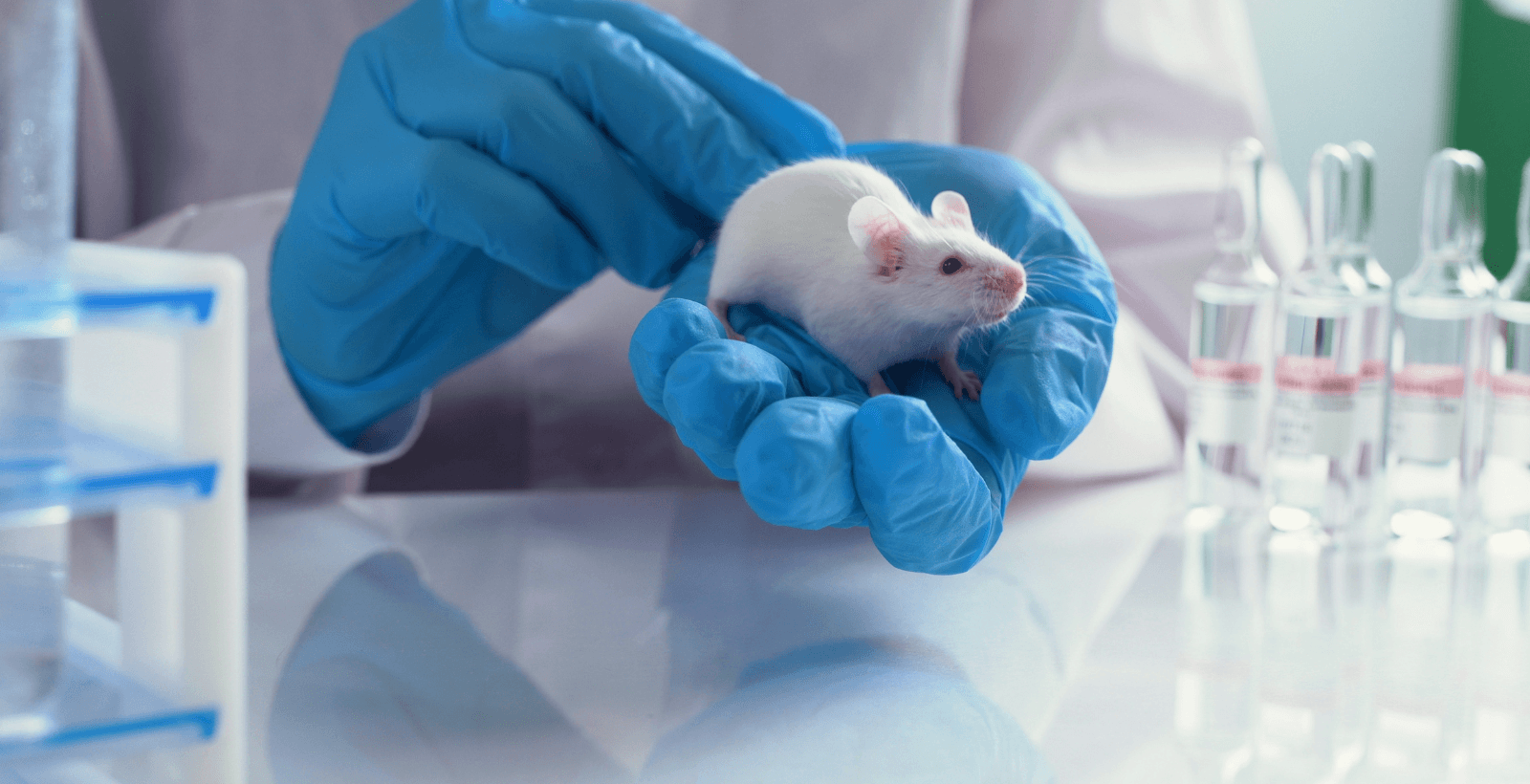
In a mouse study, researchers found that benefits associated with tunnel handling largely persisted even after repeated restraint, injection, and anesthesia. The finding supports taking mouse handling and restraint seriously; it does not establish one handling method for every species or experiment. Mouse-handling study
Discuss the appropriate approach with the animal-care and veterinary team, then train personnel in the actual workflow. Familiarity with general animal handling does not necessarily establish competency with a particular procedure or device, or even translatability between species.
Acclimation also needs a defined purpose. Time spent in the facility and familiarity with a specific procedure are different considerations. If the study requires procedure-specific acclimation, make the approved approach clear enough that different staff can apply it consistently.
Review what happens when an animal does not respond as expected. Staff should know the criteria for pausing, stopping, or seeking help. That decision should not depend on who happens to be available.
Prepare the procedure and recovery area together
Preparation should cover the animal’s next stage as well as the procedure about to begin. Recovery space and assigned personnel need to be ready before they are needed.
Walk through the physical setup with the people who will use it. Confirm that equipment is appropriate, the required observations can be made, and records are accessible from the working position.
For inhalant anesthesia, follow the approved procedure and the manufacturer’s instructions for the complete delivery system. Equipment preparation should include the waste-gas controls required by the institution. Low-flow capability does not make the rest of that system unnecessary.
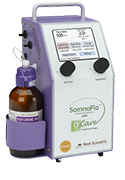
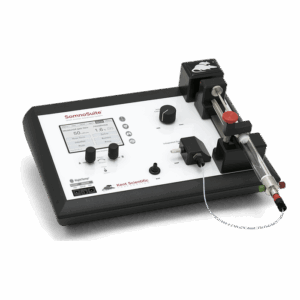
Kent’s low-flow rodent anesthesia equipment may support the selected workflow, but its place should be specific: the system must suit the animals and procedure, and staff must understand the selected configuration. Product selection follows the plan for care.
A brief preparation check is useful when it catches an actual failure. Build it around the omissions your team needs to prevent, rather than copying a long checklist that nobody can readily use.
Plan temperature support through recovery
Temperature management deserves attention before, during, and after anesthesia. The warming device and the measurement method need to be considered together.
In a controlled study in adult rats under isoflurane anesthesia, researchers compared warming approaches and found active warming more effective than passive insulation at maintaining temperature. The study supports planning thermal support deliberately, while its specific conditions limit how directly the results transfer to other animals and procedures. Rat-warming study
The practical plan should explain how staff assess the animal’s temperature and respond when it falls outside the approved range. A warm surface alone does not establish the animal’s temperature.
Recovery should have its own criteria and owner. Agree on when close observation ends, how continuing care is handed over, and what requires veterinary attention. Turning off an anesthetic or finishing a measurement is not a substitute for those decisions.
Record observations where decisions happen
A record is most useful when the next person can use it. Design documentation around the decisions the team actually needs to make.
For a procedure handoff, that may mean the confirmed animal identity, what was done, and the observations or care still requiring attention. The approved protocol and institutional requirements determine the necessary details.
Use a consistent location for current information. If the same event appears in several systems, establish which record is authoritative and how corrections are handled. Otherwise, an apparently complete record can leave staff unsure which version to follow.
Electronic transfer can reduce duplicate entry when the systems support it. Verify that transfer before depending on it, including what happens when a connection fails or a record is changed.
Review documentation with the person who receives it. A form that makes sense to its author may omit the detail the next technician needs. Improving that handoff is often more useful than adding another field.
Keep equipment readiness connected to training
An available instrument is useful when staff can operate it correctly and recognize when it is not working as expected. Training should include both conditions.
Use the manufacturer’s instructions and the institution’s training requirements to establish competency. Include the selected setup, routine checks, and the response to an unexpected result.
Make service and maintenance responsibilities explicit. Someone should know when an instrument is due for attention and how the team will manage work while it is unavailable. That information belongs in the same operational planning as the study schedule.
After a change in equipment or procedure, review whether the written instructions and animal-use approval still match the work. Consult the IACUC about changes rather than assuming that a similar product or familiar procedure requires no review.
The goal is continuity between the approved plan, the physical setup, and the person performing the task.
Use one walkthrough to find the gaps
A short walkthrough can reveal inconsistencies that are easy to miss in separate documents. Follow the animal, then follow the information.
Confirm how identity is checked at entry to the procedure. Next, trace the planned observations and the person responsible for acting on them. Finish with recovery, the handoff, and the location of the completed record.
Ask staff to describe what happens during an interruption. A disconnected reader, delayed colleague, or unavailable instrument should lead to a known response. If different people describe different responses, resolve that gap before it becomes part of the study.
Revisit the walkthrough after a meaningful change or recurring problem. The value comes from correcting a real uncertainty, not from repeating the exercise on a calendar without learning anything.
Common questions about laboratory animal management
How is management different from husbandry?
Husbandry covers daily care. Management also coordinates that care with study procedures, personnel, equipment, approvals, and records.
Does every lab need RFID?
No. The identification method should fit the animals and study. RFID is useful when electronic confirmation or supported data transfer solves a defined problem.
Who decides which monitoring is required?
The study team develops the plan with veterinary input and the relevant institutional approval. Equipment should support that plan.
What should happen when the workflow changes?
Check the change against the approved protocol and local policy before putting it into practice. Update training and working instructions as appropriate.
Make the next handoff easier
A stronger workflow gives each person the information and equipment needed to care for the animal and carry the study forward.
Kent Scientific can help you evaluate the identification, anesthesia, or warming equipment needed at a specific point in that workflow. Start with the task your team needs to perform consistently, and build the setup around it.
CODA vs. Other Rodent Blood Pressure Systems: How to Compare Tail-Cuff Options
TL;DR
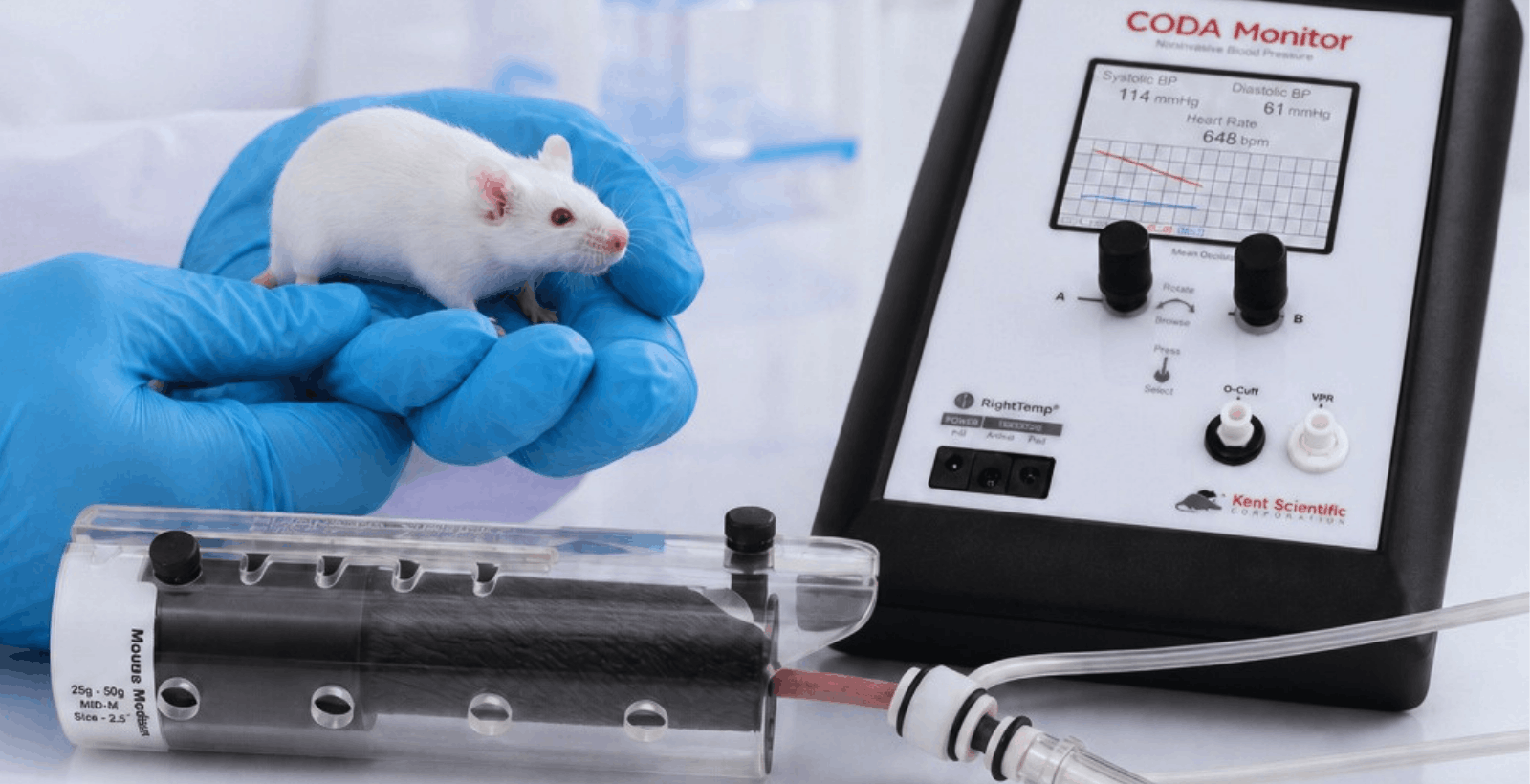
The closest alternatives to the CODA® High Throughput System are the Hatteras MC4000, Visitech BP-2000, and IITC MRBP because each supports multi-animal, non-invasive tail-cuff blood pressure measurement in mice and rats. Panlab can accommodate multiple restrained animals, but its measurements...
Rat as a Model Organism: Advantages, Limitations, and When to Use Rats in Research
TL;DR Why are rats used as model organisms?
Rats are used as model organisms because their physiology, behavior, body size, and well-characterized genetics make them useful for studying complex biological systems and human disease. Compared with mice, their...
Tail-Cuff vs. Telemetry: How to Choose Based on Study Design
TL;DR
Choose tail-cuff when your study needs scheduled blood pressure measurements across multiple mice or rats without surgical implantation. Choose telemetry when continuous, beat-to-beat, circadian, or freely moving measurements are essential to the hypothesis. Neither method is universally better. The right choice...
How to Reduce Waste Anesthetic Gas in Rodent Workflows
TL;DR
To reduce waste anesthetic gas in rodent workflows, start at the source: use an appropriate fresh gas flow for the animal and procedure, connect and maintain an effective scavenging system, check the anesthesia circuit for leaks, limit gas release during induction and...
Guide to Green Anesthesia in Research Labs
Practical ways to reduce waste gas, cost, and environmental impact in rodent workflows
TL;DR
Green anesthesia in research labs is about reducing avoidable waste while still delivering appropriate anesthesia for the animal and procedure. In rodent workflows, that usually starts with flow rate, waste anesthetic gas...
Traditional vs. Integrated Digital: How to choose Anesthetic Vaporizers
Why Size-Appropriate Anesthesia Matters for Animal Safety
TL;DR:
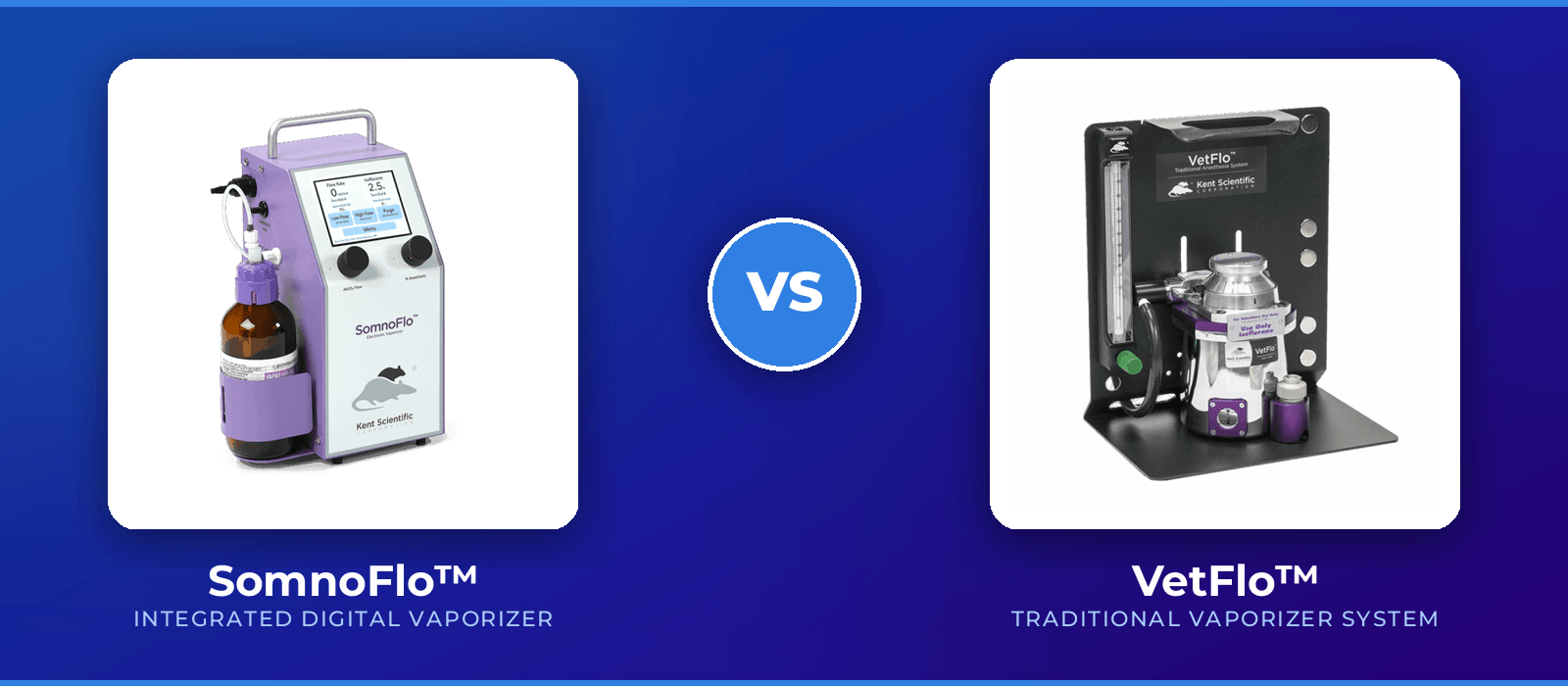
Traditional vaporizers are familiar and widely used, but they are often run at flow rates above what mice and rats need. Integrated digital anesthetic vaporizers are designed to make small animal anesthesia more size-appropriate, with lower...
Research Workflows: What to Consider When Choosing Between Rats and Mice?
TL;DR
Labs choose between rats and mice based on the study question, not convenience alone. Mice often fit genetic or high-throughput work. Rats often fit workflows that need larger body size, easier surgical access, richer behavioral testing, or repeated sampling. The...
Guide to Waste Anesthesia Gas Leakage and Compliance
What your research lab should check before your next anesthesia audit
TL;DR
Waste anesthetic gas problems rarely start with one dramatic failure. They often come from small leaks, worn tubing, loose fittings, saturated scavenging, inconsistent setup, and incomplete documentation. For labs using traditional vaporizers, service...
Building a Preclinical Procedure Station
What labs need for anesthesia, oxygen, monitoring, and surgery
TL;DR
A good preclinical procedure station is built around the procedure, species, endpoint, and user workflow. Start with anesthesia delivery and oxygen strategy, then plan respiratory support, monitoring, surgical tools, warming, recovery, documentation, and training. The goal is a...
Waste Anesthetic Gas’ Impacts on the Environment
How your lab can dramatically improve its carbon footprint
TL;DR
In this article, we dig into waste anesthetic gas’ impact on the environment. If you run mouse anesthesia at 1–1.5 L/min, most of what you deliver isn’t being used by the animal. It’s going to scavenging—or...
How to Choose an Animal Anesthesia System
Comparing SomnoSuite® vs SomnoFlo® vs SomnoFlo® O2Care
TL;DR
Understanding how to choose an animal anesthesia system is really choosing a workflow. This post walks through the common mouse and rat research scenarios that drive equipment decisions, the factors that actually determine success (procedure...
The True Cost of Rodent Anesthesia: Isoflurane, Oxygen, Calibration, and 10-Year Total Cost
A 10-year view of agent, oxygen, calibration, and downtime
TL;DR
Most anesthesia “cost” is operating cost. In this article, we summarize our newest whitepaper, including how using lower flow rates can extend the same bottle of isoflurane from 27 hours...
Important Note: The content on this blog is general educational material. It is not a protocol, regulatory guidance, veterinary recommendation, clinical directive, or safety instruction for any specific laboratory, study, animal model, institution, species, procedure, or equipment configuration.
Do not apply any information from this blog to your research without first independently confirming that it is appropriate for your specific protocol, species, model, equipment configuration, firmware version, institutional requirements, IACUC or ethical review approvals, safety policies, and applicable regulations. To the extent any content on this blog addresses Kent Scientific or other specific products, it does not replace, modify, or supplement the official User Manual or product labeling for those products.
Kent Scientific assumes no liability for any outcome resulting from reliance on blog content. Every research environment is different, and the suitability of any approach described here for your specific circumstances can only be determined by qualified personnel with knowledge of your particular setup, protocol, and regulatory obligations. Always consult your institutional veterinarian, IACUC, facility leadership, safety officer, and official product documentation before implementing any change to your procedures.
To provide the best experiences, we use technologies like cookies to store and/or access device information. Consenting to these technologies will allow us to process data such as browsing behavior or unique IDs on this site. Not consenting or withdrawing consent, may adversely affect certain features and functions.
Functional
Always active
The technical storage or access is strictly necessary for the legitimate purpose of enabling the use of a specific service explicitly requested by the subscriber or user, or for the sole purpose of carrying out the transmission of a communication over an electronic communications network.
Preferences
The technical storage or access is necessary for the legitimate purpose of storing preferences that are not requested by the subscriber or user.
Statistics
The technical storage or access that is used exclusively for statistical purposes.The technical storage or access that is used exclusively for anonymous statistical purposes. Without a subpoena, voluntary compliance on the part of your Internet Service Provider, or additional records from a third party, information stored or retrieved for this purpose alone cannot usually be used to identify you.
Marketing
The technical storage or access is required to create user profiles to send advertising, or to track the user on a website or across several websites for similar marketing purposes.
To provide the best experiences, we use technologies like cookies to store and/or access device information. Consenting to these technologies will allow us to process data such as browsing behavior or unique IDs on this site. Not consenting or withdrawing consent, may adversely affect certain features and functions.
Functional
Always active
The technical storage or access is strictly necessary for the legitimate purpose of enabling the use of a specific service explicitly requested by the subscriber or user, or for the sole purpose of carrying out the transmission of a communication over an electronic communications network.
Preferences
The technical storage or access is necessary for the legitimate purpose of storing preferences that are not requested by the subscriber or user.
Statistics
The technical storage or access that is used exclusively for statistical purposes.The technical storage or access that is used exclusively for anonymous statistical purposes. Without a subpoena, voluntary compliance on the part of your Internet Service Provider, or additional records from a third party, information stored or retrieved for this purpose alone cannot usually be used to identify you.
Marketing
The technical storage or access is required to create user profiles to send advertising, or to track the user on a website or across several websites for similar marketing purposes.