How to Reduce Waste Anesthetic Gas in Rodent Workflows
TL;DR
To reduce waste anesthetic gas in rodent workflows, start at the source: use an appropriate fresh gas flow for the animal and procedure, connect and maintain an effective scavenging system, check the anesthesia circuit for leaks, limit gas release during induction and animal transfers, turn off the vaporizer when it is not in use, and standardize these steps in a written SOP. Low-flow delivery can reduce the amount of anesthetic moving through the system, but it does not replace scavenging, ventilation, maintenance, training, or exposure monitoring.
Waste anesthetic gas control starts before the procedure
If you can smell isoflurane, you may have a problem. If you cannot smell it, you may still have a problem.
Waste anesthetic gas (WAG) includes anesthetic that escapes from the delivery system, breathing circuit, induction chamber, nose cone, scavenging system, or animal during recovery. In rodent workflows, these releases are often caused by several small issues working together: more fresh gas flow than the procedure requires, a loose connection, an induction chamber opened too quickly, a poorly fitted nose cone, or a scavenging canister that has remained in service too long.
There is rarely one dramatic failure. More often, avoidable exposure becomes part of the routine because the station appears to be working.
Here are seven practical ways to do it.
1. Use an appropriate fresh gas flow
Flow is one of the biggest variables a lab can control.
Traditional anesthesia systems are often operated at flow rates developed for larger patients or general-purpose veterinary use. When those settings are carried over to mice and rats, more carrier gas and anesthetic may move through the system than the animal and procedure require. The excess does not simply disappear. It must be captured by scavenging or it can escape into the room.
Low-flow rodent anesthesia systems are designed to deliver anesthetic at flow rates that are better scaled to small animals. Reducing flow can reduce anesthetic consumption and the volume of waste gas produced, even when the intended anesthetic concentration remains the same.
This does not mean turning the flow down without evaluating the complete setup. The appropriate flow depends on the animal, breathing circuit, induction method, procedure, equipment, and approved protocol. Follow the equipment manufacturer’s instructions and work with your veterinarian, veterinary care team, and environmental health and safety (EH&S) personnel before changing established settings.
What to check:
- Are maintenance flow settings defined for mice and rats?
- Are operators using the same validated settings?
- Are high-flow settings being carried over from induction into maintenance?
- Does the equipment support precise, repeatable low-flow delivery?
2. Capture waste gas at the source
Reducing the amount of waste gas produced lowers the burden on the scavenging system. Effective scavenging is still needed to capture what remains.
OSHA describes anesthetic gas scavenging as the first line of defense against occupational exposure. An effective system collects excess gas close to its point of release and transfers it to an appropriate disposal point. Depending on the facility and equipment, scavenging may use an active system, passive exhaust, or an adsorption canister.
The entire path matters. A canister or exhaust connection cannot protect the room if transfer tubing is disconnected, cracked, kinked, incorrectly routed, or incompatible with the delivery setup.
Before each use:
- Confirm that scavenging is connected at every active station.
- Inspect tubing, fittings, valves, and canisters.
- Verify airflow or vacuum according to the system instructions.
- Check that active scavenging is not applying unsafe pressure to the breathing circuit.
- Follow the manufacturer’s replacement criteria for adsorption canisters.
Low-flow anesthesia can reduce the amount of waste gas that needs to be captured, but it does not make scavenging optional.
3. Make leak checks part of the routine
A small leak can become a large source of exposure when a station runs for hours or is used by several people each day.
Common leak points include tubing, connectors, chamber seals, nose cones, valves, vaporizer mounting points, and scavenging connections. Equipment can still deliver anesthesia while leaking, which is why “the animal stayed anesthetized” is not a leak test.
Create a simple leak-check schedule based on the equipment manufacturer’s guidance and your institutional requirements. Include a quick pre-use inspection, routine functional checks, and documented preventive maintenance. If a leak is suspected, remove the affected station from service until it has been evaluated.
NIOSH evaluations of clinical and veterinary workplaces have repeatedly emphasized correct connections, equipment maintenance, and staff training as necessary parts of WAG control. The same principles apply at the rodent bench.
4. Tighten up induction and transfer practices
The moment the induction chamber opens is one of the easiest times to release concentrated anesthetic into the room.
Use a chamber and workflow designed to evacuate residual gas before the lid is opened. Allow the chamber to clear according to the equipment instructions, then move the animal efficiently to the nose cone or maintenance circuit. Leaving the vaporizer and flow running during delays adds waste without adding value.
The transition should be consistent enough that a new user can repeat it without improvising.
Standardize these details:
- How long the chamber’s flushed with fresh air before opening
- When the vaporizer is turned on and off
- When flow is reduced from induction to maintenance
- How the animal is transferred to the nose cone
- How the chamber and lines are cleared after the final animal
Standardizing these steps can reduce WAG and minimize user-to-user variation in anesthesia timing.
5. Check the fit at the animal
The delivery interface is another common escape point.
A nose cone that is too large, poorly positioned, or disturbed during a procedure can release anesthetic close to the researcher’s breathing zone. Select an interface sized for the animal, position it correctly, and secure the tubing so the connection does not shift during the procedure.
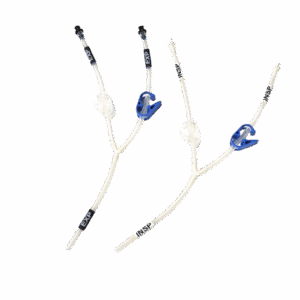
When the protocol allows intubation, a properly selected and correctly placed endotracheal tube can provide a more controlled airway for some procedures. Whether intubation is appropriate should be determined by the procedure and veterinary guidance, with WAG control considered as part of that decision.
The practical rule is simple: anesthetic should travel through the intended path, not around it.
6. Do not forget recovery
Turning off the vaporizer does not immediately end WAG release.
Use a designated recovery setup with appropriate ventilation or source capture, while maintaining the warmth and observation required by the protocol. Avoid placing an animal directly beside the operator’s face or in an enclosed, poorly ventilated area.
Recovery is part of the anesthesia workflow. Treating it as an afterthought leaves a predictable gap in exposure control.
7. Put the workflow in writing—and verify that it works
Good equipment cannot correct an inconsistent process by itself.
A useful rodent anesthesia SOP should identify validated induction and maintenance settings, scavenging setup, leak-check frequency, canister replacement criteria, shutdown steps, recovery practices, maintenance responsibilities, and what to do when a problem is found. Training should include a demonstration and observed use rather than stopping at a signature on a form.
Periodic exposure monitoring can help determine whether the full control program is working, beyond “can you smell iso?” In one published evaluation of experimental dental procedures in rodents, investigators measured employee isoflurane exposure above the NIOSH recommended level before an active ventilation control was installed. Follow-up sampling found an approximate 86% decrease in isoflurane concentration (from ~11ppm to ~1.6ppm) after the change. The important lesson is not that ventilation fixes every setup. It is that measurement can reveal exposure that routine observation misses and confirm whether a control has made a meaningful difference.
Work with EH&S or occupational health personnel to determine the appropriate monitoring method, sampling location, frequency, and interpretation for your facility. Room odor is not a monitoring program.
A practical WAG check for your rodent anesthesia station
Walk through the station in the same order gas moves through it:
- Source: Is the carrier gas supply secure and set appropriately?
- Delivery: Is the vaporizer or digital delivery system functioning within specification?
- Circuit: Are tubing, fittings, valves, chambers, and nose cones intact and connected?
- Animal interface: Does the nose cone or airway interface fit and remain stable?
- Scavenging: Is waste gas captured, transferred, and disposed of correctly?
- Recovery: Where does exhaled anesthetic go after the procedure?
- Process: Are settings, checks, maintenance, and corrective actions documented?
This approach makes WAG control easier to troubleshoot because it follows the actual workflow. It also turns a broad safety concern into a set of checks the team can repeat.
Where low-flow rodent anesthesia fits
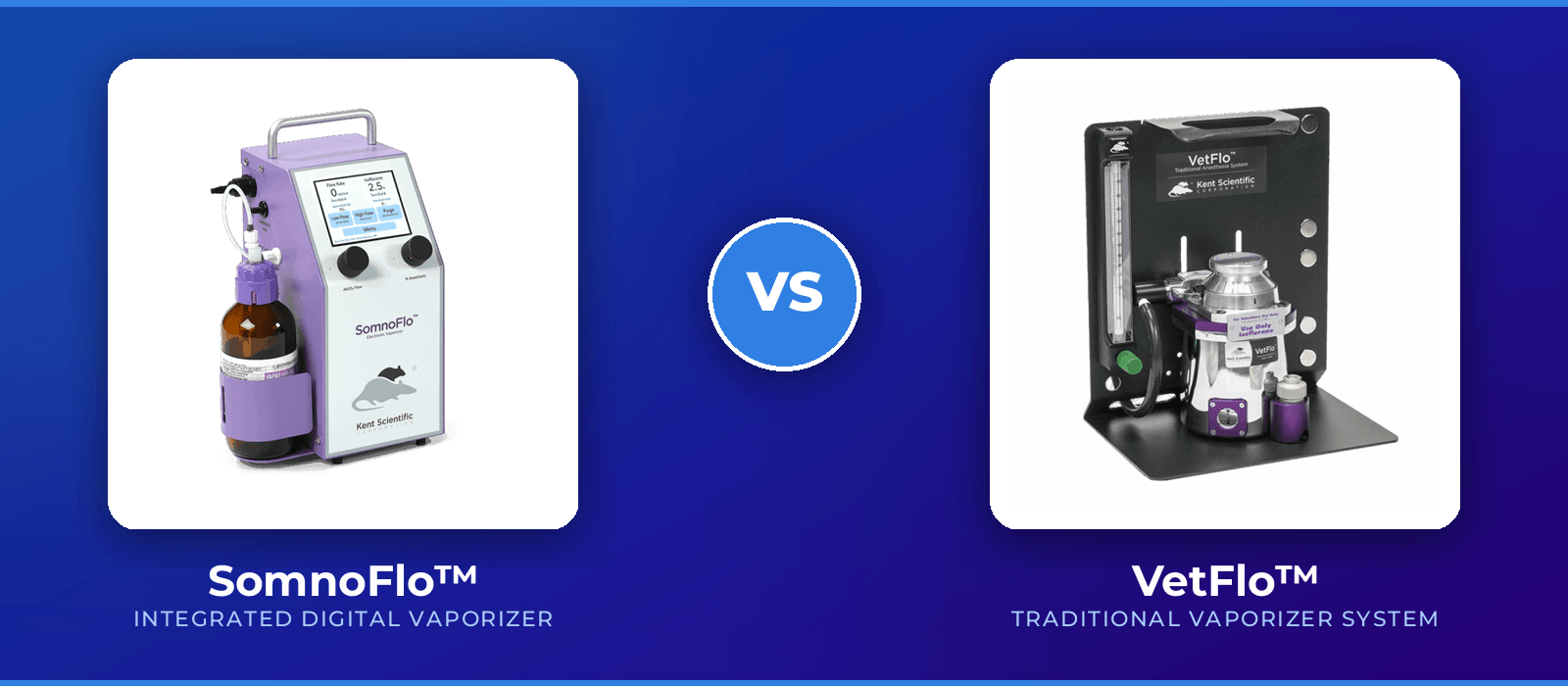
Conventional vaporizers can support safe rodent anesthesia when they are properly configured, maintained, scavenged, and operated. However, equipment designed specifically for mice and rats can make lower-flow, standardized delivery easier to achieve.
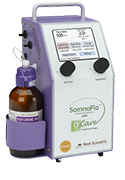
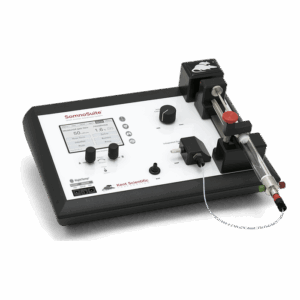
Kent Scientific’s SomnoFlo® and SomnoFlo® O2Care systems are designed for low-flow rodent anesthesia. SomnoFlo O2Care also allows users to set a controlled oxygen concentration rather than relying automatically on 100% oxygen as the carrier gas. The appropriate system depends on the animal, procedure, monitoring needs, oxygen strategy, and institutional protocol.
The equipment is one part of the solution. Scavenging, leak discipline, ventilation, recovery, maintenance, training, and documentation still matter.
If your lab is reviewing its anesthesia stations, Kent Scientific can help you evaluate the delivery system, flow settings, scavenging setup, and service requirements as one workflow. The result should be practical: less avoidable waste, a more consistent process, and documentation your team can defend.
Frequently Asked Questions
What is waste anesthetic gas?
Waste anesthetic gas is anesthetic gas or vapor that is released into the work environment or can no longer be used. In rodent anesthesia, it may escape through leaks, open induction chambers, poorly fitted interfaces, scavenging problems, or the animal’s exhaled breath.
What is the most effective way to reduce waste anesthetic gas?
No single control is sufficient. Use appropriate fresh gas flow, capture waste gas at the source, maintain the equipment, correct leaks, use consistent induction and recovery practices, provide effective ventilation, train users, and monitor exposure when indicated.
Does low-flow anesthesia eliminate the need for scavenging?
No. Low-flow delivery can reduce the amount of anesthetic moving through the system, but the remaining waste gas still needs to be captured and disposed of appropriately.
Are charcoal canisters enough to control isoflurane exposure?
An adsorption canister can be part of a passive scavenging system, but it must be appropriate for the agent, installed correctly, used within the manufacturer’s limits, and replaced on schedule. It does not correct upstream leaks, poor induction practices, or inadequate room ventilation.
Can I rely on smell to detect an isoflurane leak?
No, for two reasons.One is practical: odor is subjective and does not measure exposure. The other is safety related: the odor threshold for isoflurane is estimated to be around 50ppm, well above the NIOH safety limit: by the time you smell it, something’s already wrong. A station should be evaluated through routine inspection, leak testing, maintenance, and appropriate exposure monitoring—not someone’s nose.
Sources