Comparing SomnoSuite® vs SomnoFlo® vs SomnoFlo® O2Care
TL;DR
Understanding how to choose an animal anesthesia system is really choosing a workflow. This post walks through the common mouse and rat research scenarios that drive equipment decisions, the factors that actually determine success (procedure length, throughput, staffing, oxygen strategy, monitoring expectations, and waste anesthetic gas exposure), and why more labs—especially multi-site and international teams—are moving toward more standardized, lower-waste setups. It finishes with “if you’re doing X, choose this” decision rules, a simple comparison table, and the station basics that matter no matter what you buy (warming, monitoring, ventilation when needed, and consistent recovery criteria).
Where these systems show up in mouse and rat research
Anesthesia is part of your procedure workflow, not a separate lane—so how you select an animal anesthesia system has to match the work you’re doing and how your lab actually operates.
Common examples:
Neuroscience and neurosurgery: stereotaxic procedures, cranial windows, microinjections, electrode placement
Survival surgery and device work: implants, catheter work, longer surgical models
Imaging workflows: sessions that need stable physiology and predictable recovery
Cardiovascular and renal physiology: procedures where drift affects endpoints
Immunology, inflammation, metabolism, microbiome: studies where stress physiology, oxygen strategy, and temperature loss can confound readouts
High-throughput in vivo work: repeated short procedures where the limiting factor is consistency across staff and stations
Three forces are driving a lot of anesthesia system upgrades right now:
Animal safety — Labs are choosing systems that make it easier to maintain stable physiology—controlled depth, stable temperature, appropriate oxygen strategy—and deliver predictable recovery. When the station reduces drift and prevents avoidable hypothermia or respiratory instability, you help protect the animal, yourself, and your study.
Repeatability — teams want stations that can be run the same way by different people, day after day.
Waste and exposure — traditional higher-flow approaches can increase anesthetic consumption and waste anesthetic gas burden. Low-flow delivery reduces anesthetic use, which reduces waste gas load and simplifies safe handling and disposal.
That combination is a practical reason many labs are switching to the Somno line, especially when programs expand internationally and need standard stations that are easier to defend in audits and easier to run consistently.
Why labs are choosing the Somno line of anesthesia systems
Labs don’t switch anesthesia systems because they’re bored. They switch when the current setup creates recurring friction.
Common drivers:
variability between operators and stations
higher anesthetic consumption than the workflow really needs
maintenance and calibration overhead that becomes painful during inspections
difficulty scaling to longer procedures or adding monitoring/ventilation cleanly
increasing pressure to reduce waste anesthetic gas exposure and waste burden
Somno systems tend to win when the goal is a station that’s easier to standardize and easier to operate consistently—across staff, across rooms, and across sites.
A quick way to decide
If you want the short version before the details:
SomnoSuite®: best when you want an all-in-one, low-flow anesthesia station that also allows for warming and physiological monitoring
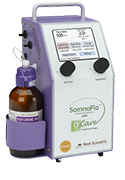
SomnoFlo®: best when you just want a compact, low-flow anesthesia station that’s easy to standardize and reduces anesthetic use and waste gas burden.
SomnoFlo O2Care®: best when you have longer anesthesia windows and need an intentional oxygen strategy that’s consistent and documented.
Now let’s get specific.
The decision factors that actually matter
1) Species and procedure length
Mice lose heat quickly and drift fast. Rats drift too, especially as cases get longer. Longer cases increase the value of stability in delivery, warming, monitoring, and recovery.
2) Throughput and staffing
If multiple people run the station, standardization matters more than “maximum configurability.” The best system is usually the one that makes the right workflow easy to repeat.
3) Oxygen strategy and physiologic relevance
Many programs still default to 100% oxygen. More teams are now treating oxygen strategy as a protocol decision—room air, 100% O₂, or blending—based on endpoints and procedure duration. If this is part of your SOP conversation, it should be part of your system choice.
4) Monitoring and documentation expectations
Your study doesn’t need every monitor every time. It does need a consistent plan that matches your endpoints. Documentation should support interpretation across cohorts.
5) Exposure and compliance
Lower anesthetic consumption reduces waste gas burden. That’s a safety issue and a workflow issue.
A quick note on environmental impact
Anesthetic consumption and waste anesthetic gas aren’t only safety topics. They also have environmental and disposal implications. Low-flow delivery reduces how much anesthetic is used per case and reduces the waste gas load that needs to be captured and managed. For many labs, that’s become a practical reason to modernize alongside welfare and reproducibility goals.
System comparison
SomnoSuite: low-flow anesthesia delivery built for mice and rats
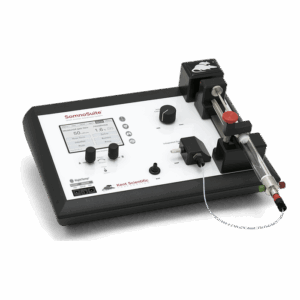
SomnoSuite is Kent Scientific’s low-flow anesthesia delivery system designed specifically for mice and rats. Unlike traditional vaporizers, it uses a precision syringe pump and an integrated digital vaporizer to deliver anesthesia at low flow rates proportional to the animal’s size. It can use either room air or compressed gas.
For many labs, SomnoSuite becomes the “standard station” because it supports repeatable delivery with low anesthetic use. Furthermore, integrated warming and optional physiological monitoring modules help prevent drift and tell you the data you need.
What you get with SomnoSuite (the parts that matter in practice)
Low anesthetic consumption—typical use can be under 1 mL of isoflurane per hour
No servicing or calibration needed for the electronic vaporizer, with a no-calibration certificate intended to support facility inspections
Digital vaporizer + weight-based calculation that auto-calculates flow rate based on animal weight
Built-in air compressor to use room air as a carrier gas
Induction chamber flush designed to minimize waste anesthetic gas exposure
Small footprint, which matters in crowded procedure rooms and stereotaxic setups
Stereotaxic integration
Multi-animal capability for greater efficiency in appropriate protocols
Modular capability for integrated monitoring options and third-party data output compatibility
Safety alarms to support consistent operation
Where SomnoSuite fits best
mouse and rat labs running repeatable anesthesia workflows
multi-user environments where standardization matters
high-throughput short procedures where setup consistency drives outcomes
labs looking to reduce anesthetic use and waste gas burden
SomnoFlo: flexible rodent anesthesia for mixed workflows
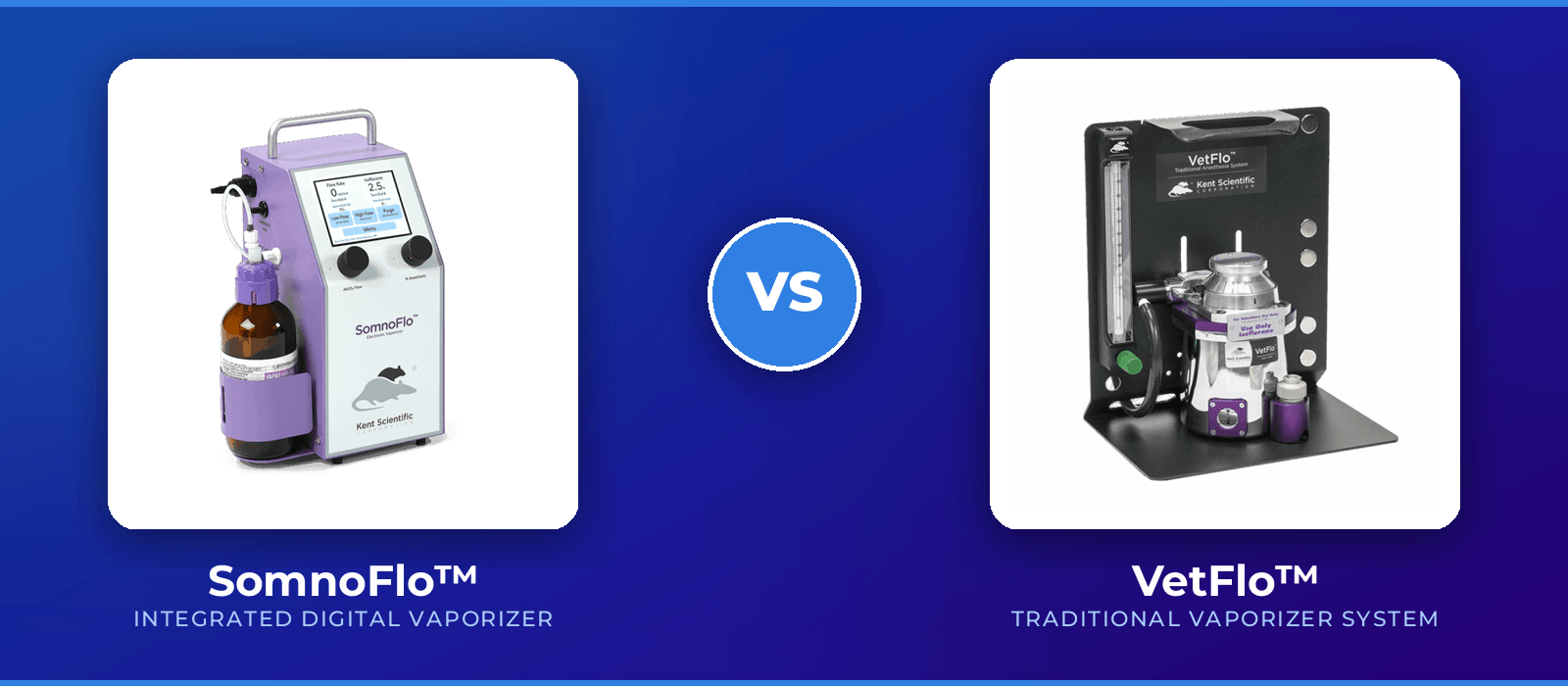
We heard you; the SomnoSuite is fantastic, but sometimes you just need to deliver anesthesia. The SomnoFlo keeps all the benefits associated with digital low-flow vaporizers (including small footprint, ability to use room air, and no need for annual calibration), but we used your feedback to include some new components:
Draws iso directly from the bottle; no need for a separate syringe
Just delivers anesthesia; no warming, no monitoring, no problem
SomnoFlo is also the base platform for O2Care, so if oxygen strategy is becoming a formal part of your SOP, SomnoFlo is usually the starting point.
Where SomnoFlo fits best
mixed mouse/rat programs with varied procedure types
shared stations that support different protocols
teams that want a system that can evolve with the program
SomnoFlo O2Care: built for longer surgeries and oxygen strategy
SomnoFlo O2Care is positioned for longer procedures and longer anesthesia windows, where physiologic drift accumulates and oxygen strategy matters more. It supports an intentional approach to oxygen delivery, including oxygen blending, which helps teams avoid treating “100% oxygen by default” as the only option.
O2Care becomes especially relevant when:
procedures are longer and stability needs to hold over time
recovery consistency is a priority
endpoints are sensitive to oxygenation and physiologic drift
the lab wants a documented oxygen strategy aligned with refinement goals
Choose an animal anesthesia system by your workflow
High-throughput procedures
Start with SomnoSuite when your priority is repeatable low-flow delivery, low anesthetic use, and easy standardization of not only anesthetic delivery, but also warming or vital signs monitoring, across staff.
Choose SomnoFlo if those procedures sit inside a program where station configurations need to change often across different protocols.
Mixed species and mixed procedure types
Choose SomnoFlo when your lab runs a range of rodent procedures and wants a system that accommodates changing anesthetic needs.
Surgeries or Anesthesia windows where oxygen strategy matters
Choose SomnoFlo O2Care when oxygen strategy is part of your SOP. This is where oxygen decisions and physiologic stability matter more over time, and where a blended approach may be useful depending on endpoints.
The anesthesia system matters, but the station matters more. If your endpoints are sensitive to physiology, choose the system that supports your procedure length and oxygen strategy, then standardize warming, monitoring, and recovery criteria alongside it.
What you still need, regardless of system
An anesthesia delivery system should be paired with a station that protects stability.
Warming and temperature control
Hypothermia under anesthesia is common in mice and still a risk in rats during longer procedures. Warming should cover induction, procedure, and recovery.
Monitoring
Match physiological monitoring to procedure duration and endpoints. Trends are more useful than single-point checks when stability matters.
Ventilation (when needed)
Not every protocol requires ventilation. For longer cases or deeper anesthesia windows, consistency matters.
Recovery criteria and documentation
Define what “stable recovery” means and record the minimum dataset consistently.
Anesthesia system comparison table
Factor
SomnoSuite
SomnoFlo
SomnoFlo O2Care
Best fit
Standardized low-flow mouse/rat workflows
Mixed workflows needing flexibility
Intentional oxygen strategy
Low-flow focus
High
Workflow-dependent
Workflow-dependent
Oxygen strategy focus
Supports room air or compressed gas
Supports room air or compressed gas
Supports blending strategy
Throughput
High
High
High
Station standardization
Strong
Strong with SOP discipline
Strong with SOP discipline
Best when
You want a compact, repeatable low-flow station
You need flexibility
oxygen strategy matters
How to Choose an Animal Anesthesia System FAQ
What is low-flow anesthesia in mice and rats? Low-flow rodent anesthesia delivers inhalant anesthesia at lower carrier gas flows while maintaining stable anesthetic delivery. In practice, it supports repeatability and reduces anesthetic consumption and waste gas burden.
Is SomnoSuite suitable for rats? Yes. SomnoSuite is designed for mice and rats. The best fit depends on procedure type, typical duration, and whether you want a standardized low-flow station.
When does SomnoFlo O2Care make the most sense? When you run longer surgeries or longer anesthesia windows and want an intentional oxygen strategy that’s consistent and documented across staff and sessions.
Is 100% oxygen always safer for rodents? Safety depends on maintaining stable physiology and aligning oxygen strategy with SOP and study endpoints. Many labs are reevaluating “100% oxygen by default” and moving toward more intentional strategies when appropriate.
What else should be standardized with an anesthesia system? Warming, monitoring, recovery criteria, scavenging practices, and a minimum dataset for documentation. Those are the variables that most often drive drift across cohorts.
IACUC Protocols for Rodent Research: What to Include and How to Prepare
TL;DR
An IACUC protocol describes proposed animal work so the institution can evaluate it before covered activities begin. A useful rodent protocol connects the research question, animal numbers, procedures, and care in one consistent account. Use your institution’s current form...
RFID Microchips for Mice and Rats: A Guide to Rodent Identification
TL;DR
RFID microchips give research mice and rats an electronic identifier that a compatible reader can retrieve. They are worth considering when the same animal moves through repeated procedures, measurements, or staff handoffs. Their usefulness depends on how reliably the scan...
Laboratory Animal Management: Building Better Rodent Research Workflows
TL;DR
Laboratory animal management connects daily care with the people, procedures, and records that support a study. For mice and rats, the practical goal is continuity: the approved plan should remain clear as an animal moves from housing through a procedure and recovery. Reliable...
CODA vs. Other Rodent Blood Pressure Systems: How to Compare Tail-Cuff Options
TL;DR
The closest alternatives to the CODA® High Throughput System are the Hatteras MC4000, Visitech BP-2000, and IITC MRBP because each supports multi-animal, non-invasive tail-cuff blood pressure measurement in mice and rats. Panlab can accommodate multiple restrained animals, but its measurements...
Rat as a Model Organism: Advantages, Limitations, and When to Use Rats in Research
TL;DR Why are rats used as model organisms?
Rats are used as model organisms because their physiology, behavior, body size, and well-characterized genetics make them useful for studying complex biological systems and human disease. Compared with mice, their...
Tail-Cuff vs. Telemetry: How to Choose Based on Study Design
TL;DR
Choose tail-cuff when your study needs scheduled blood pressure measurements across multiple mice or rats without surgical implantation. Choose telemetry when continuous, beat-to-beat, circadian, or freely moving measurements are essential to the hypothesis. Neither method is universally better. The right choice...
How to Reduce Waste Anesthetic Gas in Rodent Workflows
TL;DR
To reduce waste anesthetic gas in rodent workflows, start at the source: use an appropriate fresh gas flow for the animal and procedure, connect and maintain an effective scavenging system, check the anesthesia circuit for leaks, limit gas release during induction and...
Guide to Green Anesthesia in Research Labs
Practical ways to reduce waste gas, cost, and environmental impact in rodent workflows
TL;DR
Green anesthesia in research labs is about reducing avoidable waste while still delivering appropriate anesthesia for the animal and procedure. In rodent workflows, that usually starts with flow rate, waste anesthetic gas...
Traditional vs. Integrated Digital: How to choose Anesthetic Vaporizers
Why Size-Appropriate Anesthesia Matters for Animal Safety
TL;DR:
Traditional vaporizers are familiar and widely used, but they are often run at flow rates above what mice and rats need. Integrated digital anesthetic vaporizers are designed to make small animal anesthesia more size-appropriate, with lower...
Research Workflows: What to Consider When Choosing Between Rats and Mice?
TL;DR
Labs choose between rats and mice based on the study question, not convenience alone. Mice often fit genetic or high-throughput work. Rats often fit workflows that need larger body size, easier surgical access, richer behavioral testing, or repeated sampling. The...
Guide to Waste Anesthesia Gas Leakage and Compliance
What your research lab should check before your next anesthesia audit
TL;DR
Waste anesthetic gas problems rarely start with one dramatic failure. They often come from small leaks, worn tubing, loose fittings, saturated scavenging, inconsistent setup, and incomplete documentation. For labs using traditional vaporizers, service...
Building a Preclinical Procedure Station
What labs need for anesthesia, oxygen, monitoring, and surgery
TL;DR
A good preclinical procedure station is built around the procedure, species, endpoint, and user workflow. Start with anesthesia delivery and oxygen strategy, then plan respiratory support, monitoring, surgical tools, warming, recovery, documentation, and training. The goal is a...
Important Note: The content on this blog is general educational material. It is not a protocol, regulatory guidance, veterinary recommendation, clinical directive, or safety instruction for any specific laboratory, study, animal model, institution, species, procedure, or equipment configuration.
Do not apply any information from this blog to your research without first independently confirming that it is appropriate for your specific protocol, species, model, equipment configuration, firmware version, institutional requirements, IACUC or ethical review approvals, safety policies, and applicable regulations. To the extent any content on this blog addresses Kent Scientific or other specific products, it does not replace, modify, or supplement the official User Manual or product labeling for those products.
Kent Scientific assumes no liability for any outcome resulting from reliance on blog content. Every research environment is different, and the suitability of any approach described here for your specific circumstances can only be determined by qualified personnel with knowledge of your particular setup, protocol, and regulatory obligations. Always consult your institutional veterinarian, IACUC, facility leadership, safety officer, and official product documentation before implementing any change to your procedures.
To provide the best experiences, we use technologies like cookies to store and/or access device information. Consenting to these technologies will allow us to process data such as browsing behavior or unique IDs on this site. Not consenting or withdrawing consent, may adversely affect certain features and functions.
Functional
Always active
The technical storage or access is strictly necessary for the legitimate purpose of enabling the use of a specific service explicitly requested by the subscriber or user, or for the sole purpose of carrying out the transmission of a communication over an electronic communications network.
Preferences
The technical storage or access is necessary for the legitimate purpose of storing preferences that are not requested by the subscriber or user.
Statistics
The technical storage or access that is used exclusively for statistical purposes.The technical storage or access that is used exclusively for anonymous statistical purposes. Without a subpoena, voluntary compliance on the part of your Internet Service Provider, or additional records from a third party, information stored or retrieved for this purpose alone cannot usually be used to identify you.
Marketing
The technical storage or access is required to create user profiles to send advertising, or to track the user on a website or across several websites for similar marketing purposes.
To provide the best experiences, we use technologies like cookies to store and/or access device information. Consenting to these technologies will allow us to process data such as browsing behavior or unique IDs on this site. Not consenting or withdrawing consent, may adversely affect certain features and functions.
Functional
Always active
The technical storage or access is strictly necessary for the legitimate purpose of enabling the use of a specific service explicitly requested by the subscriber or user, or for the sole purpose of carrying out the transmission of a communication over an electronic communications network.
Preferences
The technical storage or access is necessary for the legitimate purpose of storing preferences that are not requested by the subscriber or user.
Statistics
The technical storage or access that is used exclusively for statistical purposes.The technical storage or access that is used exclusively for anonymous statistical purposes. Without a subpoena, voluntary compliance on the part of your Internet Service Provider, or additional records from a third party, information stored or retrieved for this purpose alone cannot usually be used to identify you.
Marketing
The technical storage or access is required to create user profiles to send advertising, or to track the user on a website or across several websites for similar marketing purposes.