Tail-Cuff vs. Telemetry: How to Choose Based on Study Design
Tail-Cuff vs. Telemetry: How to Choose Based on Study Design
TL;DR
Choose tail-cuff when your study needs scheduled blood pressure measurements across multiple mice or rats without surgical implantation. Choose telemetry when continuous, beat-to-beat, circadian, or freely moving measurements are essential to the hypothesis. Neither method is universally better. The right choice depends on what must be measured, when it must be measured, how often, and under what conditions.
Blood pressure methods should follow the study question—not the other way around.
Tail-cuff and implantable radiotelemetry can both produce valuable blood pressure data in mice and rats, but they answer different kinds of questions. Tail-cuff is non-invasive, practical for cohorts, and well suited to defined measurement sessions. Telemetry collects continuous data from freely moving animals, making it valuable when timing, short-lived responses, or natural activity cycles are central to the study.
The decision is not simply accuracy versus convenience. Study endpoints, sampling frequency, animal state, restraint sensitivity, cohort size, surgical burden, recovery time, staffing, and budget all matter.
This guide explains where each method fits and offers a study-design framework for choosing between them.
What is the main difference between tail-cuff and telemetry?
Tail-cuff measures blood pressure during scheduled sessions by temporarily occluding blood flow in the tail and detecting the returning signal as the cuff releases. Animals are generally restrained or anesthetized for the measurement, and consistent warming, acclimation, cuff fit, and session structure are important for usable data.
Implantable radiotelemetry measures arterial pressure through a surgically placed catheter connected to a transmitter. After recovery, it can collect data repeatedly or continuously while the animal moves in its home environment. Telemetry can reveal short-duration responses and changes across light-dark cycles that scheduled measurements may miss.
The practical distinction is straightforward:
Tail-cuff samples blood pressure at planned time points.
Telemetry follows blood pressure over time.
That difference should drive the choice.
Tail-cuff vs. telemetry at a glance
Study-design factor
Tail-cuff
Implantable telemetry
Measurement pattern
Scheduled sessions
Continuous or programmed recordings
Animal condition
Restrained or anesthetized
Freely moving after surgical recovery
Surgical implantation
No
Yes
Circadian analysis
Limited to selected time points
Strong fit for light-dark cycle analysis
Short-lived responses
May be missed between sessions
Can capture rapid or transient changes
Cohort throughput
Strong, especially with multi-animal systems
Typically more resource-intensive per animal
Acclimation needs
Acclimation to handling and restraint
Recovery and acclimation after implantation
Main confounders
Restraint, temperature, motion, tail perfusion
Surgery, recovery, catheter placement, drift or signal loss
Upfront cost
Generally lower
Generally higher
Best fit
Screening, cohort comparisons, defined longitudinal time points
Use this table as a starting point, then evaluate each method against the biological question and study protocol.
Choose tail-cuff when scheduled measurements answer the question
Tail-cuff is often the better fit when the study does not require continuous monitoring. It can support repeat measurements across days or weeks without implanting a catheter or transmitter, and it scales efficiently when several animals or treatment groups must be compared.
1. Your endpoint is a change at defined time points
Many studies ask whether blood pressure differs between groups at baseline, after a treatment period, or at several scheduled checkpoints. If the primary endpoint is the average systolic, diastolic, or mean pressure obtained under a standardized session protocol, continuous recording may add volume without adding useful biological information.
Examples include:
baseline and post-treatment comparisons
weekly monitoring during a chronic intervention
phenotype screening across genotypes
dose-group comparisons at predetermined intervals
confirming the development or reversal of hypertension
In these studies, repeatability between sessions may matter more than collecting every fluctuation between them.
2. You need to measure larger cohorts efficiently
Throughput becomes important when a study includes several cohorts, genotypes, doses, or time points. A multi-animal tail-cuff system can collect standardized measurements from several animals in the same session, reducing the time required to move through the cohort.
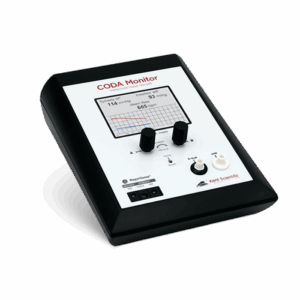
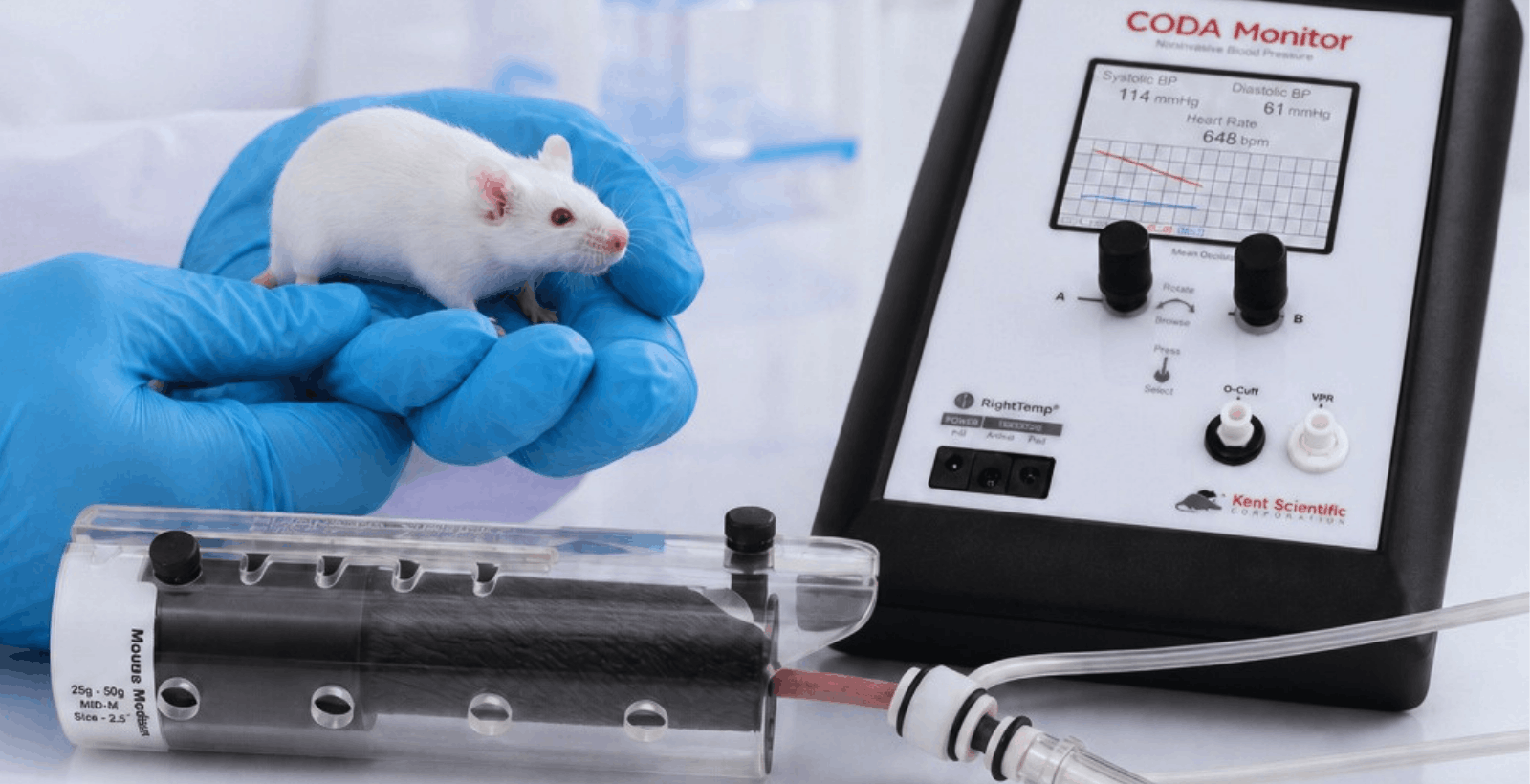
Kent Scientific’s CODA® High Throughput System supports simultaneous measurement of 2, 4, 6, or 8 animals. Multiple systems can be combined for studies involving larger cohorts. For a single-animal workflow or a lab with lower measurement volume, the CODA® Monitor provides the same non-invasive volume pressure recording approach in a smaller configuration.
The system size should match the actual workflow. More channels help only when staffing, acclimation, animal preparation, and data review can keep pace.
3. You want to avoid implantation surgery
Tail-cuff avoids the surgery, postoperative care, and recovery period required for implantable telemetry. That can simplify protocol planning and reduce the number of procedure-related variables introduced before data collection.
Non-invasive does not mean no animal impact. Restraint, handling, warming, and repeated cuff inflation still require refinement and consistency. However, when continuous measurements are not necessary, avoiding implantation may be the more proportionate approach.
4. Cost and equipment availability affect the study
Telemetry requires transmitters, receivers, surgical expertise, recovery time, and ongoing management of implanted devices and data. Those resources may be justified when the study depends on continuous physiology. They may be difficult to justify when the endpoint can be answered by scheduled measurements.
Tail-cuff generally makes blood pressure monitoring accessible to more studies and can support repeated use across cohorts. The relevant question is not which system costs less in isolation. It is which system produces the data the study needs without paying for—and imposing—the parts it does not.
Choose telemetry when time and animal state are part of the endpoint
Telemetry becomes more valuable when a single scheduled session would flatten, distort, or entirely miss the biological response.
1. You need continuous or high-frequency data
If the study must follow rapid changes, transient responses, variability, or the full shape of a blood pressure response, telemetry is usually the stronger choice. A tail-cuff session provides observations at selected times. It cannot reconstruct what happened between them.
This can matter in studies of:
acute pharmacologic responses
episodic hypertension or hypotension
rapid autonomic changes
recovery after an intervention
blood pressure variability
events that may occur unpredictably
If the hypothesis depends on response onset, peak, duration, or recovery, continuous data may be necessary rather than merely nice to have.
2. Circadian patterns matter
Mice and rats show strong daily patterns in activity and cardiovascular physiology. A measurement taken at one convenient daytime point does not represent the entire 24-hour cycle.
Telemetry can characterize pressure across light and dark phases without repeatedly handling the animal for each observation. This makes it a strong fit when the study asks whether a genotype, disease model, or intervention changes the timing or amplitude of the normal daily pattern.
Researchers using scheduled tail-cuff measurements can still compare selected time points, but the protocol should not imply that those readings describe a complete circadian profile.
3. Restraint would directly interfere with the biology under study
Restraint and handling can alter heart rate and blood pressure. Acclimation can reduce these effects, but it does not make the measurement context disappear. Research has shown that restraint can increase cardiovascular measures even in trained animals, and tail-cuff conditions can influence central blood pressure responses.
If stress reactivity, autonomic regulation, behavior, or natural activity is central to the hypothesis, freely moving telemetry may provide a better match. In that case, removing the measurement session from the observation is part of the experimental design—not simply a convenience.
4. Blood pressure must be synchronized with other continuous signals
Some studies need blood pressure aligned with electrocardiography, temperature, activity, sleep-wake state, or another continuously recorded parameter. Telemetry can make those temporal relationships visible.
Synchronizing these data streams allows researchers to see what happened at the same moment. If the scientific question depends on those temporal relationships, separate scheduled blood pressure sessions may not provide the resolution needed.
When either method can work
Some study designs do not produce an obvious winner. Both methods may detect group-level changes in blood pressure when each is used under a validated, consistent protocol. Studies have reported agreement between volume pressure recording tail-cuff measurements and telemetry under defined conditions, while other research has shown that restraint and measurement context can affect the observed response.
The apparent differences in these findings reflect how strongly agreement depends on the endpoint, protocol, model, and analysis.
For a chronic intervention with a sustained effect, tail-cuff may provide the required answer efficiently. For the same intervention, telemetry may be warranted if the effect is expected to vary across the day or appear only during activity. The appropriate measurement method depends on which aspect of the treatment response the study is designed to capture.
When both approaches appear feasible, ask which method has the fewest important blind spots for the primary endpoint.
Seven study-design questions to answer before choosing
1. Is the primary endpoint a value, a trend, or a pattern?
A value at a defined time point often fits tail-cuff. A longitudinal trend can fit tail-cuff if scheduled sampling is sufficient. A continuous or circadian pattern generally favors telemetry.
2. How quickly could the expected response begin and end?
If the response may occur between scheduled sessions, tail-cuff can miss it. If the effect is sustained for hours or days, planned measurements may capture it adequately.
3. Does restraint change the phenomenon being studied?
All awake tail-cuff protocols introduce handling and restraint. If those factors interact with the pathway or endpoint, telemetry deserves serious consideration.
4. How many animals and groups must be measured?
Larger cohorts strengthen the practical case for tail-cuff, particularly with a high-throughput system. Telemetry may still be appropriate, but capacity, receivers, surgery scheduling, recovery, and data volume must be planned.
5. Can the team perform and support implantation surgery?
Telemetry requires more than purchasing hardware. The protocol needs trained surgical personnel, appropriate anesthesia and aseptic technique, postoperative monitoring, recovery criteria, catheter maintenance considerations, and a plan for device or signal failure.
6. Which sources of variability can the protocol control?
For tail-cuff, control acclimation, handler, time of day, room conditions, warming, cuff and holder fit, motion, number of cycles, and acceptance criteria. For telemetry, control implantation technique, recovery interval, calibration, housing, recording schedule, and signal-quality criteria.
Neither method rescues an inconsistent protocol.
7. Will the extra data change a decision?
Continuous data can be scientifically powerful—and spectacularly abundant. Before choosing telemetry, determine how the added resolution will affect the hypothesis, analysis, or decision. If it will not, a well-designed tail-cuff study may be the more efficient and proportionate choice.
If tail-cuff fits, the workflow determines the data quality
Choosing tail-cuff is only the first decision. The protocol must then protect the physiological signal from avoidable variation.
Key controls include:
acclimating animals to handling, holders, warming, and cuff cycling
measuring at a consistent time of day
maintaining sufficient and repeatable tail perfusion
selecting cuffs and holders for the animal’s size
limiting movement without compromising breathing or welfare
defining the number of acclimation and accepted measurement cycles
using consistent artifact-rejection criteria
documenting exclusions rather than repeating until the data look agreeable
Kent’s CODA systems use volume pressure recording (VPR) to detect tail blood-volume changes and measure systolic, diastolic, and mean blood pressure along with heart rate and additional flow-related parameters. CODA configurations include far-infrared warming and cuff and holder options for mice and rats across a broad weight range.
Consider a hybrid validation strategy when the stakes justify it
Tail-cuff and telemetry do not always have to be treated as mutually exclusive across an entire research program. A lab may use telemetry in a smaller validation cohort to characterize timing or confirm that scheduled measurements capture the response, then use tail-cuff for larger screening or follow-up cohorts.
That approach does not automatically fit every study and should be planned prospectively. It can, however, align measurement intensity with the question being answered at each stage.
The important part is to avoid treating the methods as interchangeable after the data are collected. If the methods answer different questions, the protocol and interpretation should say so.
The right method is the one that protects the endpoint
Tail-cuff is not “telemetry lite,” and telemetry is not automatically the gold-plated answer to every blood pressure question. Each method introduces a different measurement context, workflow, and set of limitations.
Choose tail-cuff when standardized, scheduled measurements across animals and time points will answer the study question. Choose telemetry when continuous timing, freely moving physiology, circadian patterns, or short-lived responses are essential.
If tail-cuff matches your design, Kent Scientific can help configure a CODA non-invasive blood pressure system around your species, weight range, cohort size, endpoints, and workflow. Talk with a Kent specialist before the protocol is locked—not after the first unusable run.
Frequently asked questions
Is telemetry more accurate than tail-cuff?
Telemetry directly measures arterial pressure and can collect continuous data in freely moving animals after recovery. Tail-cuff measures pressure indirectly during a scheduled session. Whether telemetry provides a more useful answer depends on the endpoint. Validated tail-cuff protocols can be appropriate for group comparisons and longitudinal studies, while telemetry is stronger when continuous timing or the removal of restraint is essential. Studies have established telemetry and tail-cuff are complementary, and the American Heart Association does not recommend one over the other in terms of accuracy.
Can tail-cuff measure diastolic blood pressure in mice and rats?
It depends on the measurement technology. Volume pressure recording systems such as CODA detect changes in tail blood volume and measure systolic and diastolic pressure. Some other tail-cuff approaches derive or estimate diastolic pressure rather than measuring it directly.
Can tail-cuff be used for longitudinal studies?
Yes. Tail-cuff can support repeated measurements over days or weeks without implantation surgery. Sessions should be standardized for acclimation, warming, time of day, cuff fit, handler, cycle count, and data-acceptance criteria.
When is telemetry necessary for rodent blood pressure monitoring?
Telemetry is the stronger choice when the study requires continuous or high-frequency data, circadian analysis, short-lived responses, freely moving measurements, or synchronization with other continuous physiological signals.
Can tail-cuff and telemetry data be compared directly?
They can be compared within a prospectively designed validation study, but they should not be assumed to be interchangeable. The methods differ in measurement site, sampling frequency, animal state, and potential confounders. Interpretation should account for those differences.
IACUC Protocols for Rodent Research: What to Include and How to Prepare
TL;DR
An IACUC protocol describes proposed animal work so the institution can evaluate it before covered activities begin. A useful rodent protocol connects the research question, animal numbers, procedures, and care in one consistent account. Use your institution’s current form...
RFID Microchips for Mice and Rats: A Guide to Rodent Identification
TL;DR
RFID microchips give research mice and rats an electronic identifier that a compatible reader can retrieve. They are worth considering when the same animal moves through repeated procedures, measurements, or staff handoffs. Their usefulness depends on how reliably the scan...
Laboratory Animal Management: Building Better Rodent Research Workflows
TL;DR
Laboratory animal management connects daily care with the people, procedures, and records that support a study. For mice and rats, the practical goal is continuity: the approved plan should remain clear as an animal moves from housing through a procedure and recovery. Reliable...
CODA vs. Other Rodent Blood Pressure Systems: How to Compare Tail-Cuff Options
TL;DR
The closest alternatives to the CODA® High Throughput System are the Hatteras MC4000, Visitech BP-2000, and IITC MRBP because each supports multi-animal, non-invasive tail-cuff blood pressure measurement in mice and rats. Panlab can accommodate multiple restrained animals, but its measurements...
Rat as a Model Organism: Advantages, Limitations, and When to Use Rats in Research
TL;DR Why are rats used as model organisms?
Rats are used as model organisms because their physiology, behavior, body size, and well-characterized genetics make them useful for studying complex biological systems and human disease. Compared with mice, their...
How to Reduce Waste Anesthetic Gas in Rodent Workflows
TL;DR
To reduce waste anesthetic gas in rodent workflows, start at the source: use an appropriate fresh gas flow for the animal and procedure, connect and maintain an effective scavenging system, check the anesthesia circuit for leaks, limit gas release during induction and...
Guide to Green Anesthesia in Research Labs
Practical ways to reduce waste gas, cost, and environmental impact in rodent workflows
TL;DR
Green anesthesia in research labs is about reducing avoidable waste while still delivering appropriate anesthesia for the animal and procedure. In rodent workflows, that usually starts with flow rate, waste anesthetic gas...
Traditional vs. Integrated Digital: How to choose Anesthetic Vaporizers
Why Size-Appropriate Anesthesia Matters for Animal Safety
TL;DR:
Traditional vaporizers are familiar and widely used, but they are often run at flow rates above what mice and rats need. Integrated digital anesthetic vaporizers are designed to make small animal anesthesia more size-appropriate, with lower...
Research Workflows: What to Consider When Choosing Between Rats and Mice?
TL;DR
Labs choose between rats and mice based on the study question, not convenience alone. Mice often fit genetic or high-throughput work. Rats often fit workflows that need larger body size, easier surgical access, richer behavioral testing, or repeated sampling. The...
Guide to Waste Anesthesia Gas Leakage and Compliance
What your research lab should check before your next anesthesia audit
TL;DR
Waste anesthetic gas problems rarely start with one dramatic failure. They often come from small leaks, worn tubing, loose fittings, saturated scavenging, inconsistent setup, and incomplete documentation. For labs using traditional vaporizers, service...
Building a Preclinical Procedure Station
What labs need for anesthesia, oxygen, monitoring, and surgery
TL;DR
A good preclinical procedure station is built around the procedure, species, endpoint, and user workflow. Start with anesthesia delivery and oxygen strategy, then plan respiratory support, monitoring, surgical tools, warming, recovery, documentation, and training. The goal is a...
Waste Anesthetic Gas’ Impacts on the Environment
How your lab can dramatically improve its carbon footprint
TL;DR
In this article, we dig into waste anesthetic gas’ impact on the environment. If you run mouse anesthesia at 1–1.5 L/min, most of what you deliver isn’t being used by the animal. It’s going to scavenging—or...
Important Note: The content on this blog is general educational material. It is not a protocol, regulatory guidance, veterinary recommendation, clinical directive, or safety instruction for any specific laboratory, study, animal model, institution, species, procedure, or equipment configuration.
Do not apply any information from this blog to your research without first independently confirming that it is appropriate for your specific protocol, species, model, equipment configuration, firmware version, institutional requirements, IACUC or ethical review approvals, safety policies, and applicable regulations. To the extent any content on this blog addresses Kent Scientific or other specific products, it does not replace, modify, or supplement the official User Manual or product labeling for those products.
Kent Scientific assumes no liability for any outcome resulting from reliance on blog content. Every research environment is different, and the suitability of any approach described here for your specific circumstances can only be determined by qualified personnel with knowledge of your particular setup, protocol, and regulatory obligations. Always consult your institutional veterinarian, IACUC, facility leadership, safety officer, and official product documentation before implementing any change to your procedures.
To provide the best experiences, we use technologies like cookies to store and/or access device information. Consenting to these technologies will allow us to process data such as browsing behavior or unique IDs on this site. Not consenting or withdrawing consent, may adversely affect certain features and functions.
Functional
Always active
The technical storage or access is strictly necessary for the legitimate purpose of enabling the use of a specific service explicitly requested by the subscriber or user, or for the sole purpose of carrying out the transmission of a communication over an electronic communications network.
Preferences
The technical storage or access is necessary for the legitimate purpose of storing preferences that are not requested by the subscriber or user.
Statistics
The technical storage or access that is used exclusively for statistical purposes.The technical storage or access that is used exclusively for anonymous statistical purposes. Without a subpoena, voluntary compliance on the part of your Internet Service Provider, or additional records from a third party, information stored or retrieved for this purpose alone cannot usually be used to identify you.
Marketing
The technical storage or access is required to create user profiles to send advertising, or to track the user on a website or across several websites for similar marketing purposes.
To provide the best experiences, we use technologies like cookies to store and/or access device information. Consenting to these technologies will allow us to process data such as browsing behavior or unique IDs on this site. Not consenting or withdrawing consent, may adversely affect certain features and functions.
Functional
Always active
The technical storage or access is strictly necessary for the legitimate purpose of enabling the use of a specific service explicitly requested by the subscriber or user, or for the sole purpose of carrying out the transmission of a communication over an electronic communications network.
Preferences
The technical storage or access is necessary for the legitimate purpose of storing preferences that are not requested by the subscriber or user.
Statistics
The technical storage or access that is used exclusively for statistical purposes.The technical storage or access that is used exclusively for anonymous statistical purposes. Without a subpoena, voluntary compliance on the part of your Internet Service Provider, or additional records from a third party, information stored or retrieved for this purpose alone cannot usually be used to identify you.
Marketing
The technical storage or access is required to create user profiles to send advertising, or to track the user on a website or across several websites for similar marketing purposes.