Guide to Green Anesthesia in Research Labs
Practical ways to reduce waste gas, cost, and environmental impact in rodent workflows
TL;DR
Green anesthesia in research labs is about reducing avoidable waste while still delivering appropriate anesthesia for the animal and procedure. In rodent workflows, that usually starts with flow rate, waste anesthetic gas control, carrier gas choices, scavenging, equipment setup, and user training. The goal is a cleaner anesthesia workflow: less wasted gas, lower operating cost, reduced environmental impact, and a setup your team can run consistently.
Green anesthesia starts at your station
Environmental impact can sound like a facilities problem.
In rodent anesthesia, a lot of it starts much closer to the bench: the vaporizer, the flow setting, the carrier gas, the scavenging setup, and the way each user runs the station.
Research teams do not need a perfect sustainability program before they can reduce anesthesia waste. They can start with the settings and habits already inside the workflow.
Green anesthesia is not about making the procedure harder. It is about delivering the anesthesia the animal and protocol require while reducing gas that does not need to move through the system in the first place.
Less excess flow.
Better capture of waste gas.
More consistent setup.
Cleaner habits across users.
Those are practical changes a lab can actually evaluate.
What “green anesthesia” means in your lab
Green anesthesia in a research lab means reducing avoidable environmental impact from anesthesia workflows while maintaining animal welfare, staff safety, and data quality.
That last part matters.
A greener anesthesia workflow should never cut corners on anesthetic depth, oxygen strategy, warming, monitoring, recovery, scavenging, or protocol requirements. The goal is not to simply “use less.” The goal is to use what the procedure actually needs and stop wasting the rest.
For small animal research, green anesthesia usually includes:
- lower and more appropriate fresh gas flow
- intentional carrier gas and oxygen strategy
- properly functioning scavenging
- fewer leaks and better induction habits
- equipment scaled to mice and rats
- SOPs that users can actually follow
- training that reduces user-to-user drift
A lab can talk about sustainability in broad terms. The anesthesia station makes it measurable.
The gas you do not use still has to go somewhere
Waste anesthetic gas is the anesthetic gas that leaks from the system, escapes during setup or transitions, or is exhaled during recovery. [NIOSH]
Every inhalation anesthesia setup creates some waste. The question is how much, where it goes, and whether the workflow is creating more than the animal and procedure require.
In research labs, waste anesthetic gas can come from:
- excess flow
- loose tubing or fittings
- poor seals
- open induction transitions
- scavenging that is disconnected or saturated
- inconsistent user technique
- recovery areas without appropriate controls
Higher flow makes these problems larger because more gas moves through the system every minute.
That extra gas affects more than sustainability. It can increase scavenging burden, staff exposure concerns, oxygen use, anesthetic agent consumption, and operating cost.
The environmental story and the workflow story are connected.
The first lever: lower the flow you do not need
Flow rate is one of the easiest anesthesia variables to audit.
It is also one of the most important.
Traditional mouse inhalation anesthesia is commonly delivered at 1–1.5 L/min or higher. In Kent’s low-flow anesthesia factsheet, mouse tidal volume is listed around 26 mL/min, with a representative minimum delivery reference of about 52 mL/min. That creates a large gap between what the animal can ventilate and what many systems deliver. [Kent Low-Flow Anesthesia Factsheet]
When flow is much higher than the animal can use, most of the delivered anesthetic does not become useful anesthesia delivery. It becomes waste anesthetic gas that must be scavenged or otherwise managed.
In the Kent low-flow model, the same 2% isoflurane concentration is delivered at 0.1 L/min versus 1.5 L/min. The intended anesthetic concentration is held constant. The flow rate changes the volume of gas moving through the system. [Kent Low-Flow Anesthesia Factsheet]
That distinction should stay clear.
Low-flow anesthesia does not mean casually lowering anesthesia. It means reducing carrier gas volume while preserving the intended anesthetic concentration and confirming that the setup is appropriate for the species, procedure, equipment, and protocol.
A smaller animal needs a smaller gas strategy
Mice and rats are easy to over-flow because many anesthesia habits come from larger-animal systems or legacy setups.
A mouse does not need a large stream of carrier gas to stay anesthetized. It needs appropriate anesthetic depth, stable physiology, good warming support, proper scavenging, and a setup that does not drift from user to user.
When a lab reduces excess flow, it can reduce:
- anesthetic agent use
- oxygen use
- waste gas burden
- modeled CO₂ equivalence
- consumable cost
- scavenging load
The flow setting is small. The effect can be large.
Start by measuring before changing
Before changing a protocol, measure what is already happening.
Ask:
- How much flow are users running during induction?
- How much flow are users running during maintenance?
- Does the SOP specify different settings for mice and rats?
- Are users following the SOP?
- Are procedures run the same way across staff, students, and rooms?
If the answer is unclear, that is the first opportunity.
Green anesthesia starts with visibility.
Carrier gas should be chosen on purpose
Carrier gas strategy affects physiology, cost, environmental impact, and workflow.
Some labs use oxygen by default. Some use room air plus oxygen. Some workflows may involve nitrous oxide. Some studies require a specific oxygen strategy because physiology or endpoints matter.
The point is not to pick one answer for every lab. The point is to make the choice deliberate and documented.
Oxygen strategy belongs in the protocol conversation
Oxygen concentration can affect animal physiology and study interpretation. Labs should confirm what is appropriate for the species, model, procedure, and endpoints.
For some procedures, oxygen-enriched delivery may support physiologic stability. For others, oxygen strategy may need to be controlled carefully because it could influence the biology under study.
This is a protocol decision, not a habit decision.
The anesthesia workflow should make the chosen strategy easier to run consistently.
Nitrous oxide deserves a closer look
Nitrous oxide has environmental impact and can contribute significantly when used at high volumes. Reviews of anesthesia-related emissions identify nitrous oxide and volatile halogenated anesthetics as greenhouse gases. [2024 Anesthesia Environmental Impact Review]
Not every research lab uses nitrous oxide. For labs that do, it should be treated as part of the environmental calculation.
Questions to ask:
- Is nitrous oxide required for this protocol?
- How much is used?
- Is the system checked for leaks?
- Is there a lower-impact approach that still meets the protocol and welfare requirements?
- Has the facility veterinarian, IACUC, safety officer, or institutional leadership weighed in?
Carrier gas choices should be made with the same care as other study variables.
Scavenging is still part of the answer
Lower flow reduces how much gas moves through the system.
Scavenging controls where waste gas goes.
Both matter.
OSHA describes appropriate anesthetic gas scavenging systems as a primary engineering control for reducing occupational exposure to waste anesthetic gases. [OSHA]
That is useful framing for research labs. Green anesthesia should not imply that lower flow replaces scavenging, leak checks, or good work practices.
Lower flow reduces burden at the source. Scavenging and technique manage what remains.
Check the boring things
Many waste gas problems come from ordinary setup issues.
The useful checklist is not fancy:
- tubing connected correctly
- nose cone or mask properly fitted
- induction chamber closed and used consistently
- scavenging attached and functioning
- canister status checked
- seals inspected
- flow returned to maintenance settings after induction
- users trained on the same workflow
This is the work that keeps a lower-waste setup from becoming a lower-waste claim with messy execution.
Staff safety and sustainability overlap
The same wasted gas that affects environmental impact can also increase personnel exposure if it is not captured properly.
That is why the green anesthesia conversation should include the people running the station.
A cleaner workflow protects more than the facility footprint. It can also reduce unnecessary waste gas burden for staff working around anesthesia systems.
A greener workflow can be a repeatable workflow
Anesthesia waste often comes from inconsistency. One user leaves the flow high after induction.
Another uses a different oxygen setting.
Another forgets to check scavenging.
And another learned the setup from someone who learned it from someone else… who assumed their old protocol was fine for their new setup
Your study still runs, but the workflow slowly drifts.
A greener anesthesia workflow should be easy enough to teach and specific enough to audit.
That means the SOP should include:
- species and procedure type
- induction settings
- maintenance settings
- agent concentration range
- carrier gas and oxygen strategy
- scavenging steps
- leak-check routine
- warming and recovery plan
- what to record
The greener station is often the cleaner station.
Cleaner for the animal.
Cleaner for the user.
Cleaner for the data.
Equipment choice shapes the waste profile
Equipment does not replace judgment, training, or institutional oversight.
It can make the right workflow easier to run.
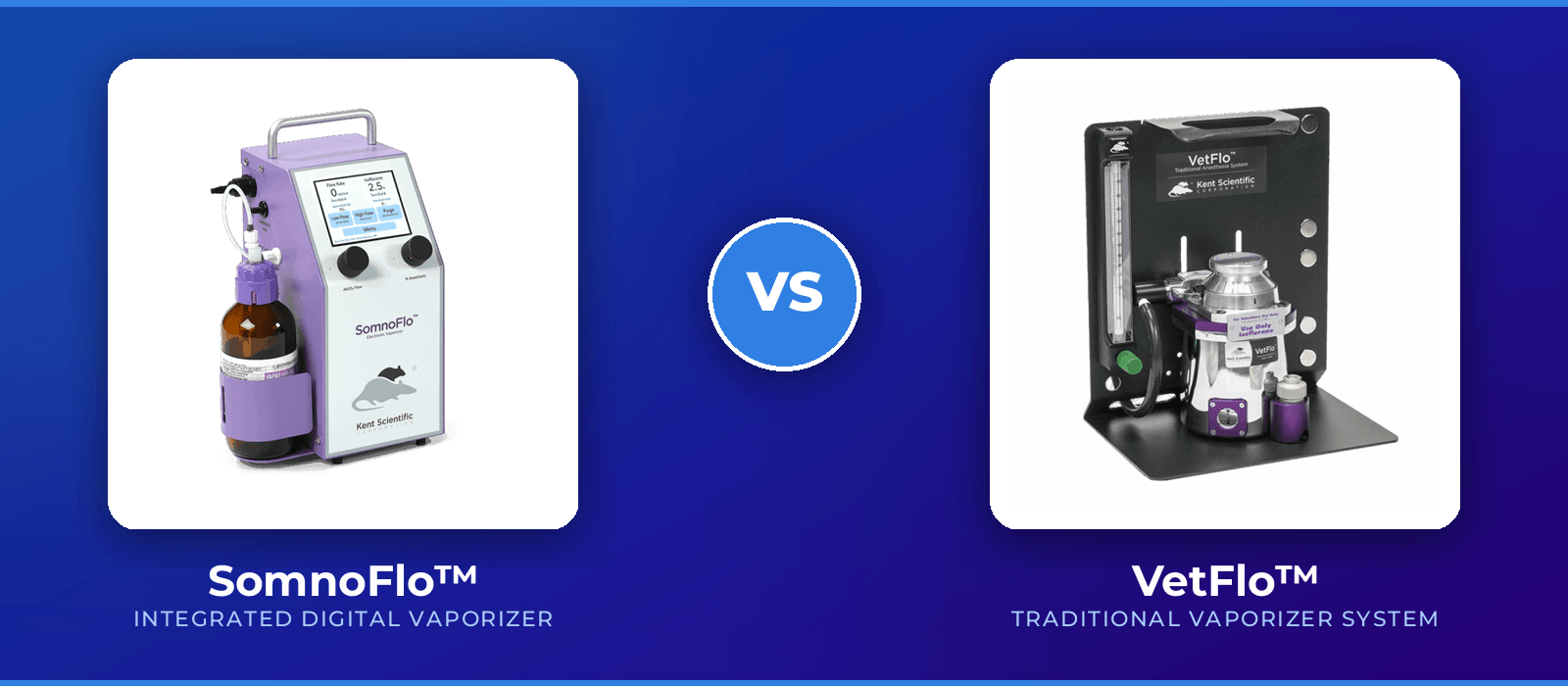
Traditional vaporizers are familiar, durable, and widely used. They can work well in experienced hands with good SOPs, appropriate maintenance, and disciplined flow settings.
They can also be easy to run at higher flows than mice and rats need.
Integrated digital systems can build more control into the station by supporting lower flow, more repeatable settings, and small animal-specific delivery.
For labs trying to reduce waste gas, oxygen use, and operating cost, equipment selection becomes part of the long-term sustainability conversation.
Traditional vaporizers need strong flow discipline
Traditional vaporizers often rely on external flowmeters, carrier gas sources, and manual user control.
That can be fine when the lab has stable users and careful training.
It can become harder when procedures rotate across grad students, postdocs, technicians, rooms, and stations.
The risk is not only “wrong setup.” The risk is small variation repeated over hundreds of procedures.
Green anesthesia depends on reducing those small variations.
Integrated digital systems can make lower-waste workflows easier to run
Integrated digital anesthetic vaporizers are useful when the lab wants more control built into the station.
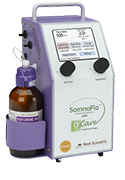
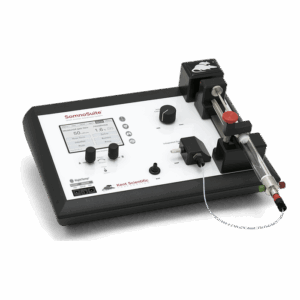
For Kent workflows, SomnoSuite, SomnoFlo, and SomnoFlo O₂ Care all fit into this conversation in different ways.
SomnoSuite and SomnoFlo both support low-flow anesthesia delivery for small animal anesthesia;SomnoFlo O₂ Care adds oxygen strategy options for labs that want low-flow delivery with more control over carrier gas composition.
The right system depends on the study, species, procedure length, number of users, oxygen needs, gas source, and facility requirements.
This is where a product conversation should start: with the workflow.
The cost case is part of the green case
A lower-waste anesthesia workflow can also lower operating cost.
That matters because sustainability work is easier to justify when it also reduces consumable use.
In Kent’s representative low-flow model, one bottle of isoflurane lasts 412 hours at low flow versus 27 hours in the traditional comparison. A 10L oxygen tank lasts 908 hours in the low-flow example versus 22 hours in the traditional example. [Kent Low-Flow Anesthesia Factsheet]
The same model estimates a 29× reduction in running costs under representative European pricing. [Kent Low-Flow Anesthesia Factsheet]
Actual costs will vary by region, supplier, flow settings, usage, and number of stations. The useful relationship is straightforward: lower unnecessary flow can reduce agent use, oxygen use, and recurring cost.
For a single low-use station, the savings may build slowly.
For multiple stations, longer procedures, or frequent anesthesia use, the operating cost picture can change quickly.
Track the numbers your facility already has
A lab does not need a complicated model to start.
Collect:
- weekly anesthesia hours
- number of stations
- maintenance flow settings
- agent use
- oxygen use
- scavenging consumables
- annual calibration or service costs
- downtime or scheduling disruptions
Those numbers create a practical baseline.
Once you have a baseline, you can decide whether lower-flow equipment, training, SOP updates, or service checks will give the biggest return.
How to build a greener anesthesia SOP
A greener SOP should make the right setup easier to run.
Start with five fields.
1. Species and procedure type
Mouse and rat workflows may need different settings. Survival surgery, imaging, stereotaxic procedures, brief induction, and longer anesthesia windows may each require different controls.
The SOP should make those differences explicit.
2. Induction and maintenance settings
Induction and maintenance are not the same workflow.
Induction may require one set of settings. Maintenance should usually be more controlled and efficient.
If users leave the station at induction flow longer than needed, waste increases quickly.
3. Carrier gas and oxygen strategy
Document what carrier gas is used, what oxygen concentration is intended, and when it changes.
The SOP should also explain who can approve changes and where those changes are recorded.
4. Scavenging and leak-check routine
Include a simple routine that users can follow every time.
Do not bury scavenging in a general safety note. Make it a visible step.
5. Recovery and warming plan
Green anesthesia cannot stop when the procedure ends.
Recovery conditions affect animal welfare and data quality. Include warming, observation, and any protocol-specific recovery requirements.
What to measure before claiming impact
Labs should be careful with environmental claims.
Before saying a workflow reduced emissions or waste, document the assumptions.
At minimum, track:
- baseline flow setting
- new flow setting
- agent concentration
- procedure duration
- weekly use
- number of stations
- agent type
- carrier gas
- oxygen use
- calculation method
That protects credibility.
It also helps a facility compare changes across rooms, users, and sites.
If your lab wants to estimate the impact of low-flow anesthesia, Kent can help model the calculation using your station count, flow settings, and usage hours.
Green anesthesia should protect welfare and data
Environmental goals should never override animal welfare, safety policies, or data integrity.
Before applying any lower-flow approach, confirm that it fits:
- species
- strain or model
- procedure
- anesthetic agent
- oxygen strategy
- warming plan
- monitoring requirements
- recovery requirements
- IACUC or ethical review expectations
- facility safety policies
- applicable regulations
This is where good science and good operations meet.
A green anesthesia workflow should reduce waste while keeping the animal stable, the user protected, and the data defensible.
A practical path forward
You do not need to fix everything at once.
Start with the station.
Look at the flow settings.
Check scavenging.
Review oxygen and carrier gas strategy.
Confirm that users are running the same workflow.
Measure agent and oxygen use.
Then decide whether training, service, SOP updates, or equipment changes will reduce the most waste without creating new risk.
Green anesthesia begins with a simple idea: use the gas the animal and procedure require, capture what remains, and stop letting excess flow quietly become a cost, safety, and environmental problem.
Where Kent Scientific can help
Kent Scientific works with small animal research teams that want anesthesia workflows built around animal size, procedural consistency, and real lab conditions.
If you are reviewing your anesthesia setup, Kent can help you think through:
- current flow settings
- species and procedure requirements
- low-flow system options
- oxygen strategy
- waste gas reduction
- operating cost
- training needs
- service and certification support
Request the low-flow anesthesia factsheet: Request the factsheet
Talk to Kent about your anesthesia workflow: Workflow assistance
Schedule Somno/CODA training: Training assistance
FAQ: Green anesthesia in research labs
What is green anesthesia in a research lab?
Green anesthesia means reducing avoidable environmental impact from anesthesia workflows while maintaining appropriate anesthetic depth, animal welfare, staff safety, and data quality.
What causes waste anesthetic gas?
Waste anesthetic gas can come from excess flow, leaks, open induction, loose connections, poor scavenging, and gas exhaled during recovery. NIOSH describes waste anesthetic gases as anesthetic gases that leak from anesthesia systems or are exhaled during recovery. [NIOSH]
Why does flow rate matter for green anesthesia?
Flow rate controls how much carrier gas and anesthetic vapor moves through the system. When flow is higher than the animal and procedure require, more gas becomes waste, increasing agent use, oxygen use, scavenging burden, operating cost, and environmental impact.
Can low-flow anesthesia support animal welfare?
Low-flow anesthesia can support animal welfare when the intended anesthetic concentration is maintained and the setup is verified for the species, procedure, equipment, and protocol. Labs should confirm what is appropriate before changing any anesthesia workflow.
Do research labs still need scavenging with low-flow anesthesia?
Yes. Low-flow reduces the amount of gas moving through the system, but scavenging and leak checks still matter. OSHA describes scavenging as a key engineering control for reducing exposure to waste anesthetic gases. [OSHA]
Which anesthetic gases have environmental impact?
Volatile anesthetics such as isoflurane, sevoflurane, and desflurane, as well as nitrous oxide, have global warming potential. Reviews of anesthesia environmental impact identify these gases as contributors to healthcare emissions. [2024 Anesthesia Environmental Impact Review]
How can labs start reducing anesthesia-related emissions?
Start by auditing flow settings, usage hours, agent consumption, oxygen use, scavenging practices, and training consistency. Then adjust settings only after confirming what is appropriate for the protocol, animal model, equipment, and institution.
What should be included in a green anesthesia SOP?
A green anesthesia SOP should include species, procedure type, induction settings, maintenance settings, carrier gas strategy, oxygen strategy, scavenging steps, leak checks, warming and recovery plan, and what users should record.
When should a lab consider low-flow anesthesia equipment?
A lab should consider low-flow anesthesia equipment when it wants to reduce waste gas, oxygen use, anesthetic consumption, user-to-user variability, and operating cost while maintaining a controlled anesthesia workflow for small animals.
Sources
- ASA / peer-reviewed review
For volatile anesthetics and nitrous oxide as greenhouse gases. (PMC)
- OSHA / NIOSH
For waste anesthetic gas definition, scavenging, leaks, and exposure controls. (OSHA)