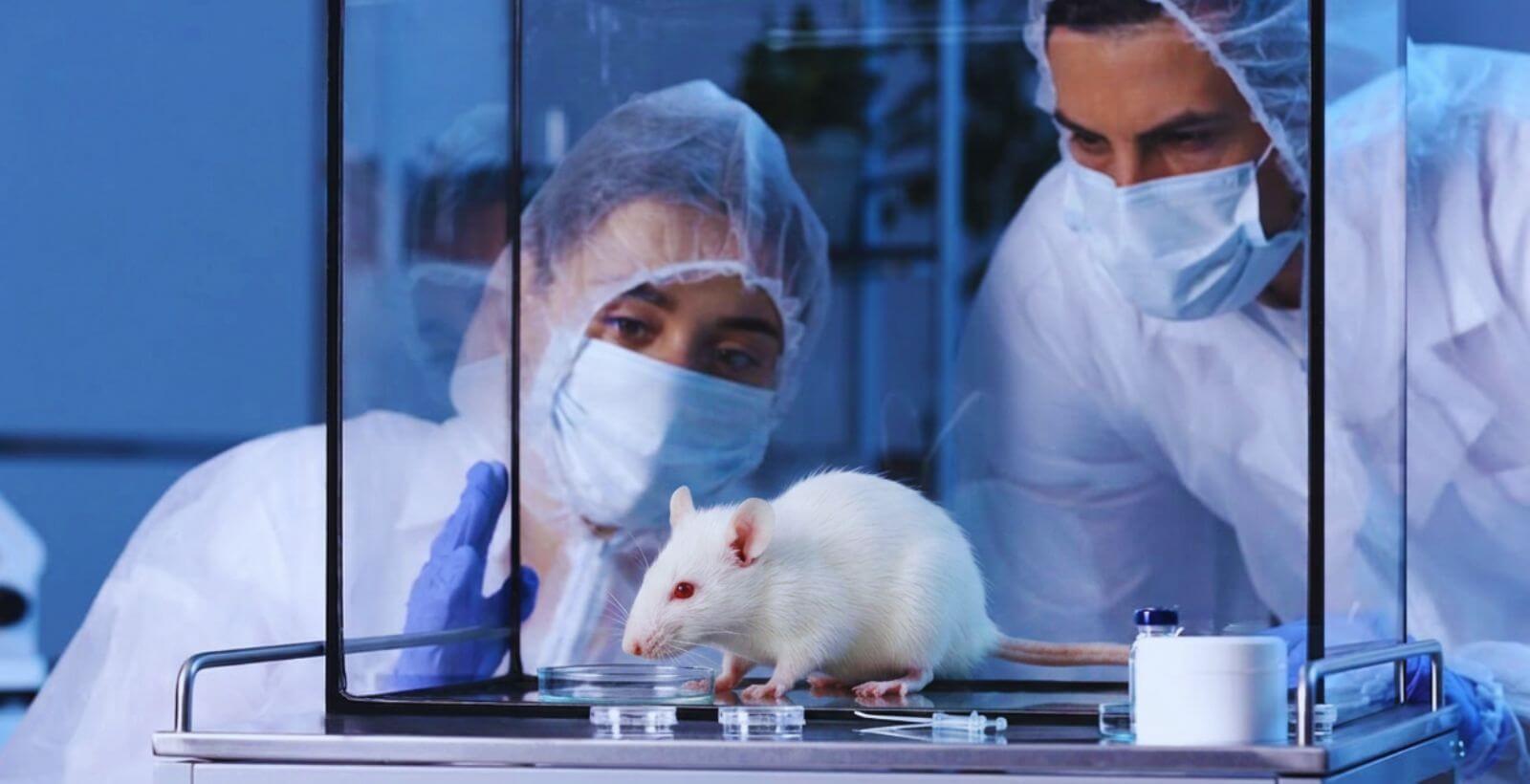
RFID Microchips for Mice and Rats: A Guide to Rodent Identification
RFID Microchips for Mice and Rats: A Guide to Rodent Identification
TL;DR
RFID microchips give research mice and rats an electronic identifier that a compatible reader can retrieve. They are worth considering when the same animal moves through repeated procedures, measurements, or staff handoffs. Their usefulness depends on how reliably the scan connects to the study record. Implantation, reader compatibility, and the animal’s size all belong in that decision.
A reliable result starts with the right animal
A carefully collected measurement has limited value if the team cannot confidently connect it to the animal it came from. Identification deserves the same attention as the measurement itself.
Consider a mouse moving from its home cage to a procedure station and back. The technician needs to confirm its study assignment, collect the planned information, and place that information in the correct record. If another person takes over, the identity needs to remain clear through the handoff.
Radiofrequency identification (RFID) can make that connection easier to maintain. Instead of reading and re-entering a visible identifier at each step, staff can scan a code associated with the animal. The practical question is where that scan removes uncertainty from your study.
This guide explains the technology, the studies most likely to benefit, and the decisions to make before selecting a system. The focus is mice and rats, where the identification method must fit both the research and the animal.
How do rodent RFID microchips work?
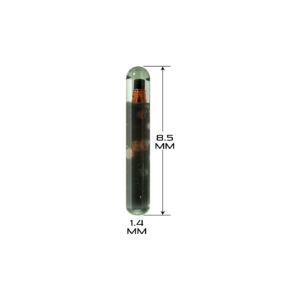
An implanted transponder, commonly called a microchip, returns its identifying code when a compatible reader energizes it. Passive chips, like the ones designed by UID, do not need a battery.
The chip supplies the identity; the rest of the system determines what happens next. A reader may display the code, save it, or transfer it to another application. Confirm those capabilities for the specific reader and software under consideration.
A useful distinction is that identification and tracking are different functions. A handheld scan identifies an animal at that moment. Following movement around a cage requires a tracking system with appropriately positioned readers and data processing.
Researchers have demonstrated that distinction in the Mouse Position Surveillance System, which uses RFID to follow individual mice in a shared enclosure. The tracking capability belongs to the complete experimental system, rather than to an implanted chip alone. RFID mouse-tracking study
For routine identification, start with the information you need at the procedure station. A clear animal ID may be sufficient. If the study also needs data transfer or temperature measurement, select components that support those functions together.
Where does RFID earn its place in a study?
RFID is most useful when identification needs to remain dependable across repeated encounters. A scan can become a consistent checkpoint between the animal and the next action.
In a longitudinal study, the team returns to the same animals over time. Identity connects today’s observation to earlier measurements. An electronic code gives staff another way to confirm that connection before collecting the next result.
The same reasoning applies when several people share procedures. If one technician prepares animals and another records measurements, decide where each person confirms the ID. Scanning only when an animal first enters a study leaves later handoffs dependent on the existing process.
Breeding colonies present a related recordkeeping problem. Cage assignments can change while an animal’s individual record must remain continuous. RFID can supply an individual identifier, while cage-level information continues to serve its own purpose.
These are workflow advantages to evaluate, rather than a promise that any RFID purchase will reduce errors. An implementation that requires staff to copy the displayed number manually retains that transcription step. An implementation that transfers the code still needs correct record matching.
A useful starting exercise is to follow one animal through a typical study day. Identify the moments when someone reads, selects, or copies its number. Then ask which of those moments a verified scan could simplify.
How does RFID compare with visible identification?
A visible mark and an electronic identifier solve overlapping problems. The choice depends on what staff need to know, when they need it, and how that information enters the record.
Cage cards keep group information accessible at the cage. They should not be treated as a substitute for individual identification when several animals must be distinguished. An individual electronic ID can work alongside the card.
Temporary markings may suit brief work in which staff can reliably distinguish the animals throughout the required interval. For a longer study, the decision includes how the mark will be maintained and how identity will be confirmed if it becomes unclear.
Ear tags, ear marks, and tattoos provide individual information that staff can inspect directly. They do not depend on a powered reader at the point of use. RFID instead offers machine reading, which becomes especially useful when the next step is an electronic record.
There is also a practical difference when identification is combined with another task. For example, an ear biopsy may provide tissue for genotyping as well as a visible mark. Adding RFID does not remove the study’s need for that tissue.
Compare complete processes, including the burden of application, repeated checks, and data entry. Avoid deciding from a single attractive feature such as permanence or scan speed. The method that works well in one facility may add unnecessary complexity in another.
Some teams will benefit from a combination. A visible identifier can support immediate recognition, while RFID supports electronic confirmation. Any combined approach should have a clear rule for resolving disagreement between identifiers.
Can RFID reduce identification mistakes?
RFID can remove a manual step when the system transfers a scanned code directly into the intended record. That is a concrete benefit the lab can test.
Imagine that a technician reads an animal number, types it into an instrument, and later copies the result into a spreadsheet. Each transfer needs to preserve the same identity. A supported electronic connection can reduce the number of times that number must be re-entered.
The remaining steps still deserve scrutiny. A correctly scanned code can be assigned to an incorrect record during setup. A user can select the wrong study. A result can be saved under a previously selected animal if the application does not behave as expected.
Before rollout, test the entire path with representative records. Confirm that a new scan selects the intended animal, that the measurement stays attached to that animal, and that an unexpected scan produces a response staff understands.
Include ordinary interruptions in the test. What happens if the reader disconnects? What if the application is on the wrong screen? Can staff tell whether a transfer succeeded?
These checks turn a general claim about improved traceability into evidence about your own setup. They also help distinguish an identification problem from a software or training problem before the study depends on the system.
What does the choice mean for animal welfare?
The welfare assessment should consider the animal’s experience over the full study. Implantation adds a procedure; later identification checks may become easier. Both belong in the comparison.
Avoid describing implantation as non-invasive or assuming that electronic identification is automatically the gentlest option. Suitability depends on the selected device, the animal, and the approved method. The veterinary team can help evaluate those factors.
Ask whether RFID would reduce repeated marking or difficult visual inspection in the actual workflow. If staff still need the same restraint for another procedure, adding a scan may improve recordkeeping without changing that restraint requirement.
The proposed benefit should remain specific. Faster identity confirmation is a reasonable implementation goal. A claim of less stress, fewer animals, or improved study outcomes needs evidence that supports that particular conclusion.
The institution’s review should also address what happens when identification fails. Staff need an approved response to an unreadable or unexpected code rather than an improvised attempt to resolve it during animal work.
The result should be a method that the team can perform consistently and that the veterinarian considers appropriate for the animals involved. Equipment selection is one part of that decision.
Can the same chip measure temperature?
Some RFID transponders combine identification with temperature sensing. A compatible system can return the animal’s ID and a temperature reading together.
That combined reading is useful only if the measurement suits the question. Different rodent temperature monitoring methods measure temperature at different sites. A reading from an implanted sensor should not be assumed interchangeable with a surface reading or another measurement site.
A study comparing implanted temperature transponders with infrared thermometry in mice during acute illness illustrates why the method matters. The researchers evaluated distinct measurement approaches, rather than treating all temperature readings as equivalent. Temperature-measurement study
For your study, establish what the sensor measures and whether its performance is appropriate across the expected conditions. If the team plans to compare new readings with historical data, evaluate that comparison before changing methods.
Kent offers temperature-sensing RFID microchips from UID alongside identification-only options. Review the current product specifications and compatible reader requirements when deciding whether the added measurement is useful.
A temperature-capable chip does not replace the complete monitoring plan. Its role should be defined alongside the observations and other measurements required for the procedure.
What should you check before choosing a system?
Start with the animal and work outward. The chip, implantation equipment, reader, and record system need to function as one usable setup.
First, confirm suitability for the species and body size. A device marketed for laboratory animals is not necessarily appropriate for every mouse or rat at every age. Review the manufacturer’s information with the veterinary team before selecting the device and timing.
Next, confirm component compatibility. Matching the word “RFID” on two product descriptions is insufficient. Ask which exact chips the reader supports, what information it retrieves, and what accessories are needed.
Then check the workflow at its intended location. A reader that works well on a clear desk may be awkward at a crowded procedure station. Staff should be able to scan, see the result, and continue their work without creating an avoidable handoff.
The record system deserves its own demonstration. Ask to see how information is transferred and exported, and confirm whether that process works with the software your team uses. A feature described as data storage may not mean direct integration.
Plan for maintenance and interruptions as well. Decide where readers are stored, how they fit facility cleaning procedures, and what staff should do when equipment is unavailable. Those decisions determine whether the system remains useful after the initial demonstration.
Finally, evaluate cost across the intended use. The purchase includes more than chips: reader access, compatible equipment, staff training, and the record connection may all affect adoption. Compare those needs with the specific identification problem the lab wants to solve.
Where do Kent’s UID products fit?
Kent’s UID range gives laboratories options for electronic identification and temperature-enabled identification. The selection should follow the study’s needs.
The standard UID microchip includes a unique identification code and programmable memory. That additional field can hold a short label, but the laboratory’s main record should remain the place for complete, current study information.
For a team comparing configurations, bring a concrete workflow to the conversation: the animals involved, where scans will occur, what information must be collected, and where that information needs to go. Those details help narrow the choice more effectively than a broad request for an RFID system.
If temperature is part of the plan, ask about the complete measurement pathway. If identification alone is needed, focus on dependable scanning and record transfer. Extra capability is useful when it supports a defined task.
Kent’s product information can establish available features. Your team’s verification establishes how the selected configuration works in your facility.
Questions researchers ask about rodent RFID
Does a passive RFID chip need charging?
No. A passive transponder uses energy from a compatible reader during a scan. The reader itself still needs its specified power source.
Can RFID replace every other identifier?
Not necessarily. A facility may still require cage cards or a visible individual mark. RFID can add electronic confirmation while those methods remain in use.
Does an RFID chip track an animal continuously?
A chip alone does not provide continuous tracking. That requires a compatible tracking system designed to collect and interpret repeated detections.
Is a temperature reading included with every chip?
No. Select a temperature-enabled transponder and a reader that supports its temperature function when that measurement is required.
How should implantation appear in the animal-use protocol?
Animal ID will need to be included as part of your protocol. Discuss implantation with the local IACUC and veterinarian as part of planning the proposed animal work. Follow the institution’s requirements for describing and approving the procedure.
Make the next identity check dependable
The strongest reason to choose RFID is a clear improvement at a point where animal identity matters. Start there, test the full connection to the record, and train the team on the situations most likely to interrupt it.
Kent Scientific can help you compare UID components against that workflow. Bring the animal requirements and the data-transfer needs, and build the identification setup around them.
IACUC Protocols for Rodent Research: What to Include and How to Prepare
TL;DR
An IACUC protocol describes proposed animal work so the institution can evaluate it before covered activities begin. A useful rodent protocol connects the research question, animal numbers, procedures, and care in one consistent account. Use your institution’s current form...
Laboratory Animal Management: Building Better Rodent Research Workflows
TL;DR
Laboratory animal management connects daily care with the people, procedures, and records that support a study. For mice and rats, the practical goal is continuity: the approved plan should remain clear as an animal moves from housing through a procedure and recovery. Reliable...
CODA vs. Other Rodent Blood Pressure Systems: How to Compare Tail-Cuff Options
TL;DR
The closest alternatives to the CODA® High Throughput System are the Hatteras MC4000, Visitech BP-2000, and IITC MRBP because each supports multi-animal, non-invasive tail-cuff blood pressure measurement in mice and rats. Panlab can accommodate multiple restrained animals, but its measurements...
Rat as a Model Organism: Advantages, Limitations, and When to Use Rats in Research
TL;DR Why are rats used as model organisms?
Rats are used as model organisms because their physiology, behavior, body size, and well-characterized genetics make them useful for studying complex biological systems and human disease. Compared with mice, their...
Tail-Cuff vs. Telemetry: How to Choose Based on Study Design
TL;DR
Choose tail-cuff when your study needs scheduled blood pressure measurements across multiple mice or rats without surgical implantation. Choose telemetry when continuous, beat-to-beat, circadian, or freely moving measurements are essential to the hypothesis. Neither method is universally better. The right choice...
How to Reduce Waste Anesthetic Gas in Rodent Workflows
TL;DR
To reduce waste anesthetic gas in rodent workflows, start at the source: use an appropriate fresh gas flow for the animal and procedure, connect and maintain an effective scavenging system, check the anesthesia circuit for leaks, limit gas release during induction and...
Guide to Green Anesthesia in Research Labs
Practical ways to reduce waste gas, cost, and environmental impact in rodent workflows
TL;DR
Green anesthesia in research labs is about reducing avoidable waste while still delivering appropriate anesthesia for the animal and procedure. In rodent workflows, that usually starts with flow rate, waste anesthetic gas...
Traditional vs. Integrated Digital: How to choose Anesthetic Vaporizers
Why Size-Appropriate Anesthesia Matters for Animal Safety
TL;DR:
Traditional vaporizers are familiar and widely used, but they are often run at flow rates above what mice and rats need. Integrated digital anesthetic vaporizers are designed to make small animal anesthesia more size-appropriate, with lower...
Research Workflows: What to Consider When Choosing Between Rats and Mice?
TL;DR
Labs choose between rats and mice based on the study question, not convenience alone. Mice often fit genetic or high-throughput work. Rats often fit workflows that need larger body size, easier surgical access, richer behavioral testing, or repeated sampling. The...
Guide to Waste Anesthesia Gas Leakage and Compliance
What your research lab should check before your next anesthesia audit
TL;DR
Waste anesthetic gas problems rarely start with one dramatic failure. They often come from small leaks, worn tubing, loose fittings, saturated scavenging, inconsistent setup, and incomplete documentation. For labs using traditional vaporizers, service...
Building a Preclinical Procedure Station
What labs need for anesthesia, oxygen, monitoring, and surgery
TL;DR
A good preclinical procedure station is built around the procedure, species, endpoint, and user workflow. Start with anesthesia delivery and oxygen strategy, then plan respiratory support, monitoring, surgical tools, warming, recovery, documentation, and training. The goal is a...
Waste Anesthetic Gas’ Impacts on the Environment
How your lab can dramatically improve its carbon footprint
TL;DR
In this article, we dig into waste anesthetic gas’ impact on the environment. If you run mouse anesthesia at 1–1.5 L/min, most of what you deliver isn’t being used by the animal. It’s going to scavenging—or...
Important Note: The content on this blog is general educational material. It is not a protocol, regulatory guidance, veterinary recommendation, clinical directive, or safety instruction for any specific laboratory, study, animal model, institution, species, procedure, or equipment configuration.
Do not apply any information from this blog to your research without first independently confirming that it is appropriate for your specific protocol, species, model, equipment configuration, firmware version, institutional requirements, IACUC or ethical review approvals, safety policies, and applicable regulations. To the extent any content on this blog addresses Kent Scientific or other specific products, it does not replace, modify, or supplement the official User Manual or product labeling for those products.
Kent Scientific assumes no liability for any outcome resulting from reliance on blog content. Every research environment is different, and the suitability of any approach described here for your specific circumstances can only be determined by qualified personnel with knowledge of your particular setup, protocol, and regulatory obligations. Always consult your institutional veterinarian, IACUC, facility leadership, safety officer, and official product documentation before implementing any change to your procedures.
To provide the best experiences, we use technologies like cookies to store and/or access device information. Consenting to these technologies will allow us to process data such as browsing behavior or unique IDs on this site. Not consenting or withdrawing consent, may adversely affect certain features and functions.
Functional
Always active
The technical storage or access is strictly necessary for the legitimate purpose of enabling the use of a specific service explicitly requested by the subscriber or user, or for the sole purpose of carrying out the transmission of a communication over an electronic communications network.
Preferences
The technical storage or access is necessary for the legitimate purpose of storing preferences that are not requested by the subscriber or user.
Statistics
The technical storage or access that is used exclusively for statistical purposes.The technical storage or access that is used exclusively for anonymous statistical purposes. Without a subpoena, voluntary compliance on the part of your Internet Service Provider, or additional records from a third party, information stored or retrieved for this purpose alone cannot usually be used to identify you.
Marketing
The technical storage or access is required to create user profiles to send advertising, or to track the user on a website or across several websites for similar marketing purposes.
To provide the best experiences, we use technologies like cookies to store and/or access device information. Consenting to these technologies will allow us to process data such as browsing behavior or unique IDs on this site. Not consenting or withdrawing consent, may adversely affect certain features and functions.
Functional
Always active
The technical storage or access is strictly necessary for the legitimate purpose of enabling the use of a specific service explicitly requested by the subscriber or user, or for the sole purpose of carrying out the transmission of a communication over an electronic communications network.
Preferences
The technical storage or access is necessary for the legitimate purpose of storing preferences that are not requested by the subscriber or user.
Statistics
The technical storage or access that is used exclusively for statistical purposes.The technical storage or access that is used exclusively for anonymous statistical purposes. Without a subpoena, voluntary compliance on the part of your Internet Service Provider, or additional records from a third party, information stored or retrieved for this purpose alone cannot usually be used to identify you.
Marketing
The technical storage or access is required to create user profiles to send advertising, or to track the user on a website or across several websites for similar marketing purposes.