Guide to Waste Anesthesia Gas Leakage and Compliance
What your research lab should check before your next anesthesia audit
TL;DR
Waste anesthetic gas problems rarely start with one dramatic failure. They often come from small leaks, worn tubing, loose fittings, saturated scavenging, inconsistent setup, and incomplete documentation. For labs using traditional vaporizers, service and certification should cover more than the vaporizer dial. A defensible anesthesia setup includes leak checks, output verification, flow review, scavenging review, labels, records, and a clear plan for keeping the station repeatable between visits.
Your anesthesia station can look fine and still create risk
Traditional vaporizers are familiar. Many labs have used them for years. They sit on the bench, the dial turns, the animal goes under anesthesia, and the procedure moves forward.
That familiarity can hide problems.
A vaporizer can still deliver anesthetic while the station around it slowly becomes harder to defend. Tubing ages. Seals loosen. Flowmeters drift. Scavenging canisters get overlooked. Induction chambers crack. Users develop slightly different habits. Certificates get separated from the equipment they belong to.
None of that feels like a crisis on a normal Tuesday.
Then an audit, inspection, exposure concern, or failed check turns a routine station into a scramble.
Waste anesthetic gas is a good example. OSHA describes waste anesthetic gases as anesthetic gases and vapors that leak into the surrounding room during medical procedures. The same OSHA overview identifies nitrous oxide and halogenated agents (such as isoflurane and sevoflurane) as gases of concern.
For research labs, vivariums, and preclinical facilities, the practical question is simple:
Can you show that your anesthesia setup is working, checked, documented, and controlled?
That is where service and certification become more than a yearly task.
Waste gas leakage starts in ordinary places
Waste anesthetic gas does not need a dramatic source.
It can come from routine weak points in the station:
- cracked or stiff tubing
- loose fittings
- worn seals or gaskets
- poorly seated induction chamber lids
- nose cones or masks that do not fit well
- scavenging connections that are loose or disconnected
- canisters that are full or overdue
- flow settings that are higher than the animal or workflow requires
- users leaving induction flow higher than needed during maintenance
NIOSH describes waste anesthetic gases as small amounts of volatile anesthetic gases that leak from the anesthetic breathing circuit into room air. That definition is simple, and it matches what facilities see in real life.
The source is often somewhere in the setup.
The fix starts with checking the whole setup.
Compliance pressure usually shows up as documentation pressure
Most research teams understand that equipment should be serviced. The harder part is proving what was checked, when it was checked, and what happened afterward.
That is where compliance pressure becomes documentation pressure.
A facility may need to show:
- vaporizer output was checked
- flow was verified
- leaks were assessed
- repairs or adjustments were documented
- certification dates are current
- equipment labels match records
- users know how to run the station
- scavenging is in place and functional
- known issues were corrected or escalated
That last point matters. A certificate alone does not answer every question.
If the vaporizer is checked but the tubing is cracked, the station still has a problem.
If the output is verified but scavenging is disconnected, the station still has a problem.
If a system passes once but users run it inconsistently for the next eleven months, the station can still drift (and can even drift if it’s sitting unused for “emergency backup”).
Several institutions treat anesthesia machine and vaporizer assessment as a recurring safety and animal care requirement. For example, the University of Michigan’s Animal Care & Use Program requires anesthetic machines and vaporizers to undergo manual assessment at least once a year, and its coordinated inspection includes leak checks, gas output verification, and flow rate verification. University of Michigan Animal Care & Use Program
Your institution may use different language, schedules, and requirements. The theme is consistent: anesthesia equipment needs to be checked, and the records need to be defensible.
A vaporizer certificate covers one part of the risk
A traditional vaporizer certificate is important.
It can show that the vaporizer output was evaluated against expected performance. It can help document that the unit was assessed and labeled. It can support internal records for IACUC, veterinary, EHS, facility, or accreditation review.
But the vaporizer is only one part of the anesthesia path.
A rodent anesthesia station often includes:
- oxygen source or concentrator
- flowmeter
- vaporizer
- induction chamber
- breathing circuit or tubing
- nose cone or mask
- active or passive scavenging
- waste gas canister
- warming support
- monitoring equipment
- user SOPs and training records
A leak, mismatch, or bad habit anywhere along that path can affect waste gas exposure, animal welfare, procedure consistency, and audit readiness.
That is why the more useful question is:
Was the anesthesia station checked, or only the vaporizer?
The station-level checklist labs should care about
A good service and certification visit should help a lab answer the questions an auditor, facility manager, veterinarian, or safety officer may ask later.
1. Is the vaporizer delivering what the dial says?
Output verification is the center of vaporizer certification.
AAALAC’s guidance statements describe calibration as a way to ensure anesthesia machines and vaporizers deliver accurate and consistent doses of anesthetic gases, which helps reduce the risk of overdose. AAALAC Guidance Statements
For research teams, this supports both animal welfare and data quality.
If the vaporizer output is off, anesthesia depth may be off too.
2. Is the station leaking?
Leak checks should cover more than the obvious places.
A service visit should look at tubing, fittings, induction chamber integrity, nose cone connections, scavenging connections, and the pressure behavior of the system where appropriate.
Small leaks matter because they can create chronic exposure concerns and make the setup harder to defend.
3. Is the flow rate accurate and appropriate?
Flow affects delivery, waste gas burden, scavenging load, oxygen use, and operating cost.
If the flowmeter is inaccurate or users run higher flow than the workflow requires, the system may consume more anesthetic and carrier gas than necessary.
For facilities using traditional vaporizers in mouse or rat workflows, this is often where hidden waste shows up.
4. Is scavenging connected and working?
OSHA’s anesthetic gas guidance discusses engineering controls, work practices, and administrative controls that help reduce workplace exposures. Scavenging belongs in that control conversation.
For labs, the practical check is direct:
- Is the scavenging system connected?
- Is the canister active and within useful capacity?
- Are users trained to connect or turn it on every time?
- Is the setup appropriate for the station and procedure?
A lab should never assume scavenging is working just because a canister is nearby or the vaporizer is connected to a vacuum.
5. Are the records easy to find?
Documentation should be attached to the real-world station, not buried in someone’s email.
At minimum, records should make it easy to confirm:
- service date
- next due date
- unit ID or serial number
- test results
- repairs performed
- issues found (and any next steps for remedy)
- who performed the service
- what the lab should correct or monitor
A clean record makes the next audit less stressful.
It also helps new users trust the station they are about to use.
The hidden cost of “it worked last month”
Anesthesia stations tend to earn trust through habit.
If the setup worked last month, teams assume it will work this month.
That assumption can be expensive.
Leaks can increase gas use. Drift can affect anesthetic depth. Worn tubing can create inconsistent delivery. Poor scavenging can increase exposure burden. Missing records can create compliance friction. Downtime can delay procedures.
The cost rarely shows up as one line item.
It shows up as:
- extra isoflurane use
- extra oxygen use
- more frequent scavenging replacement
- time spent troubleshooting
- delayed studies
- nervous audit prep
- staff complaints about odor or exposure concern
- inconsistent usebetween users
- avoidable calls to facilities, EHS, or veterinary staff
A preventive service visit is often easier than a reactive fix.
Traditional vaporizers need a stronger service rhythm
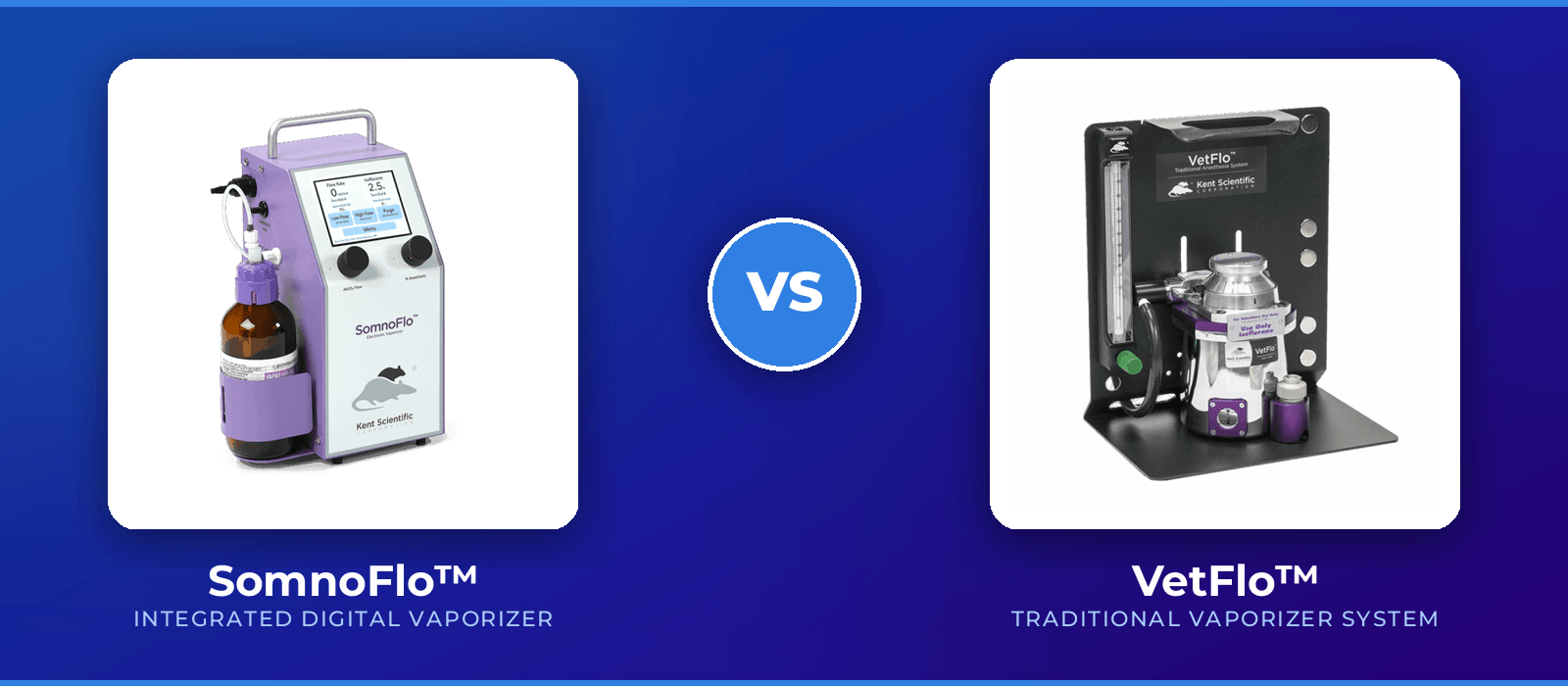
Traditional vaporizers can be good tools.
They also depend heavily on maintenance, tubing condition, flow accuracy, user technique, and the full station setup around them.
That makes service rhythm important.
A lab should know:
- When was the vaporizer last certified?
- What exactly was tested?
- Was output checked across the relevant dial range?
- Was flow verified?
- Were leaks checked?
- Was scavenging reviewed?
- Were tubing or fittings replaced?
- Were any repairs recommended and applied?
- Are certificates current and attached to the correct units?
- Who owns the next service date?
If those answers are scattered, the station is not as defensible as it should be
What Kent SC checks differently
Kent SC exists because research anesthesia is not the same as generic vaporizer service.
Rodent work has its own realities: small animals, small flows, nose cones, induction chambers, scavenging canisters, rotating students, shared procedure rooms, and equipment that may be used by several labs in different ways.
Kent SC is built around that environment.
A Kent SC visit can support:
- vaporizer service and certification
- output checks
- leak checks
- flow checks
- documentation for facility records
- station-level review
- tubing and connection review
- scavenging setup review
- loaner support where available
- service planning for multi-station facilities
- practical guidance for keeping the setup repeatable
The goal is not only to put a sticker on a vaporizer so it’s one less thing to do for your annual safety inspection.
The goal is to help the lab keep the anesthesia workflow documented, defensible, and repeatable.
When to book service before the calendar forces it
Annual certification schedules are useful. But there are times when a lab should not wait for the usual cycle.
Consider booking a service or certification visit if:
- the vaporizer is due or overdue
- the last certificate is missing
- users report unusual odor or suspected waste gas leakage
- tubing is stiff, cracked, yellowed, or mismatched
- the station has been moved between rooms
- scavenging setup has changed
- a new cohort or long study is about to start
- new users are being trained
- the lab is preparing for an IACUC, EHS, AAALAC, or internal review
- flow settings seem inconsistent
- the vaporizer has not been used in a while
- multiple labs share the same equipment
Service is much easier to schedule before the study window becomes urgent.
How to prepare for a Kent SC visit
A good service visit starts with a simple inventory.
Before the visit, gather:
- vaporizer make/model
- serial number, if available
- last service date
- current certificate, if available
- number of stations
- species and typical workflows
- usual carrier gas source
- scavenging setup
- known issues or user complaints
- any upcoming study deadlines
- Have the station available in the configuration users actually run.
That last detail matters, even if your setup isn’t “textbook perfect.” A vaporizer checked away from its real setup may miss the station-level problems that affect daily use.
Kent SC can help identify what should be checked, what should be documented, and whether the setup needs repair, replacement parts, additional training, or a broader workflow review.
Compliance is easier when the setup is boring
The best anesthesia station is a little boring.
It works the same way across users.
It has current records.
The tubing is in good condition.
The vaporizer output has been checked.
Leaks have been assessed.
Scavenging is connected and understood.
The SOP matches the setup on the bench.
That kind of boring is valuable.
It protects staff.
It supports animal welfare.
It keeps data cleaner.
It gives facility teams something defensible when someone asks, “How do you know this is working?”
Talk to Kent SC
If your lab or vivarium uses traditional vaporizers, Kent SC can help you check the parts of the anesthesia workflow that usually get missed until there is a problem.
Book a visit for service, certification, leak checks, station review, or workflow tune-ups.
Follow this link to:
- Schedule Kent SC service or certification
- Ask when Kent SC will be in your region
- Need support in the Midwest? Ask about Jeff and Kent SC regional service availability
FAQ: Waste gas leakage and vaporizer compliance
What is waste anesthetic gas (WAG)?
Waste anesthetic gas is anesthetic gas that leaks into the surrounding room or is released from the anesthesia system instead of being captured or controlled. OSHA describes waste anesthetic gases as gases and vapors that leak into the surrounding room during medical procedures. OSHA Waste Anesthetic Gases
What causes waste gas leakage in research anesthesia setups?
Common sources include loose tubing, worn fittings, poor seals, cracked induction chambers, poorly fitted nose cones, disconnected scavenging, saturated canisters, high flow settings, and inconsistent user technique.
Does a vaporizer certificate mean the whole anesthesia station is compliant?
A vaporizer certificate helps document that the vaporizer was assessed, but it may not cover the entire station. The broader setup includes tubing, flowmeters, induction chambers, scavenging, masks or nose cones, oxygen source, and user practices.
How often should vaporizers be certified?
Requirements vary by institution and protocol. Some research institutions require annual manual assessment of anesthetic machines and vaporizers; for example, the University of Michigan Animal Care & Use Program states that its IACUC requires assessment at least once a year. University of Michigan ACUO Labs should follow their own institutional policies and applicable requirements.
What should a vaporizer service visit include?
A useful service visit should include output verification, leak checks, flow checks, inspection of tubing and connections, scavenging review, documentation, labeling, and recommendations for repair or follow-up where needed.
Why does scavenging matter if the vaporizer is working?
A vaporizer can deliver anesthetic correctly while the station still releases waste gas through leaks, poor connections, or incomplete scavenging. OSHA guidance discusses engineering controls, work practices, and administrative controls for reducing workplace exposure to anesthetic gases. OSHA Anesthetic Gases Guidelines
Can Kent SC help with traditional vaporizers?
Yes. Kent SC supports service and certification for traditional vaporizers and can also review the broader anesthesia station, including leaks, tubing, flow, scavenging, and documentation.