














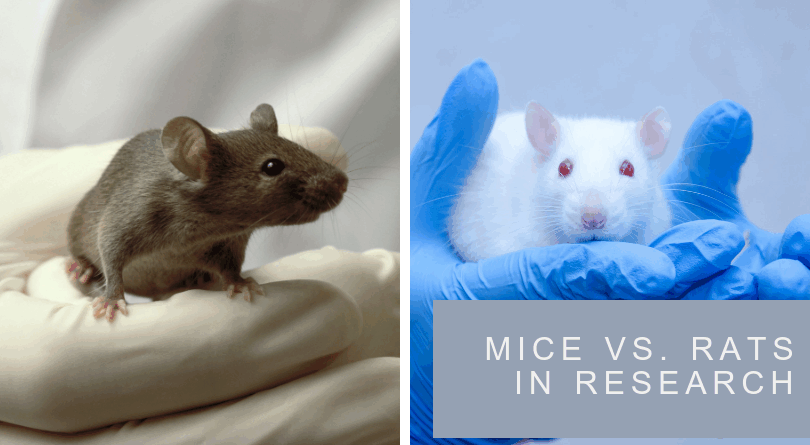
Mice vs Rats in Research: What Changes in Your Anesthesia, Monitoring, and Warming Setup?
TL;DR
While mice and rats are both “rodents,” they don’t behave the same under anesthesia, they don’t lose heat the same way, and they don’t tolerate handling the same way. Those differences show up as workflow friction, inconsistent recoveries, and avoidable variability.
This guide explains what actually changes when you move between mice vs rats in real lab workflows—especially in anesthesia delivery, temperature management, ventilation, and physiological monitoring—and gives practical setup recipes that scale from “one-off procedure” to “busy recovery bay.”
If you treat mice and rats like interchangeable small animals, your protocol can still “work”… but things might get messy:
- temperature drift under anesthesia (mice especially)
- inconsistent induction/recovery timing between operators
- more variability in physiologic endpoints (or hidden confounds)
- slower recoveries that eat time and complicate welfare documentation
The goal isn’t to instrument everything. The goal is to build a setup that’s stable, repeatable, and realistic on a busy day.
What’s truly different between in mice vs rats
Mice and rats get lumped into the same mental drawer: “rodents.” And sure—both have whiskers, but in the lab, they’re not interchangeable.
A mouse will lose heat faster, drift sooner under anesthesia, and “feel fine” right up until your recovery bay turns into a triage line.
A rat can be more forgiving—bigger thermal mass, easier access, generally easier handling—but that forgiveness can trick you into thinking your setup is tighter than it really is.
This post is here to sort out the differences between the two.
We’ll walk through what actually changes when you move between mouse and rat work—anesthesia delivery, warming and temperature monitoring (core and surface), ventilation, and basic physiological monitoring—and we’ll translate those differences into practical setup recipes you can run on a normal Tuesday.
Mice vs rats background
Mice and rats share enough biology to make both useful models, but they differ in ways that can materially affect experimental design, welfare, and workflow. Below are the practical differences researchers most often account for when choosing a model.
Size and anatomy
Adult rats typically weigh several times more than adult mice and have larger anatomical structures. That extra size can make certain procedures—especially surgical work—more accessible and easier to perform with precision. It can also improve feasibility for some imaging approaches and instrumentation.
Mice, on the other hand, require smaller doses and less compound per animal, which can make studies more cost-efficient at scale. Their smaller size also changes feasibility and sensitivity for certain neuro and optogenetic approaches.
Handling and stress response
Rats are generally easier to handle and often show less stress during routine interaction. In some cases, they can be trained to remain still for specific procedures, reducing the need for sedation.
Mice are typically more stress-reactive to repeated handling (many labs mitigate this with consistent technique and low-stress handling tools such as tunnels).. That doesn’t mean mice are “worse”—it means handling effects are more likely to become a confound, particularly in behavioral and physiology-sensitive studies.
Social behavior and aggression
Rats and mice differ in social cognition and typical social behavior. Rats often show higher tolerance for social interaction and can be less aggressive in group settings. Mice can be more territorial and more prone to aggression depending on strain, housing conditions, and enrichment.
These differences can influence outcomes in studies involving social behavior, stress, and neuropsychiatric models.
Neurobiology, reward, and impulsivity
Mouse and rat neurobiology differs in ways that can show up in reward processing, habit formation, impulsivity, and responses to psychoactive compounds. This can influence model choice in addiction, mood, and behavioral neuroscience research, where the behavioral phenotype is central to interpretation.
Learning and cognition
Rats are often considered strong performers in tasks requiring complex learning, strategy, and sustained performance, and they can be easier to train for certain cognitive paradigms. Mice can learn many of the same tasks but may require more training time, and handling-related stress can have a larger impact on task performance depending on the experimental design.
Genetics and model availability
Over the last two decades, mice have been used more widely than rats in many domains largely because of the depth and breadth of available genetic tools, strains, and legacy transgenic models. Advances in gene-editing have expanded options for both species, giving researchers more flexibility to match model to mechanism rather than forcing the question.
Bottom line: Both models are powerful. The right choice depends on the biology you need, the phenotype you’re measuring, and the workflow you can run consistently—especially around anesthesia, temperature management, ventilation, and monitoring.
Changes to make in your anesthesia, monitoring, and warming setups for rats and mice
1) Size changes heat loss, access, and tolerance for “small mistakes”
Rats have more thermal mass and more room to work. They’re generally more forgiving during handling and procedures.
Mice cool faster, stress faster, and show instability sooner when the workflow isn’t dialed in.
What changes in your setup
- Temperature control becomes “start immediately” in mice, not “we’ll check later.”
- Mask fit and leak control matter more in mice, because small leaks have bigger proportional effects.
- Monitoring cadence starts earlier in mice because drift can begin before you feel like anything is wrong.
Why you should care
Most “mice vs rat differences” you feel in practice are really workflow stability differences. Mice punish variability.
2) Handling tolerance: rats are usually easier; mice often pay a stress tax
Rats are typically easier to handle and may be trainable for certain tasks. Mice are more stress-reactive, especially with repeated handling. If you’re doing repeated checks or repeated procedures, handling becomes part of your experimental condition whether you like it or not.
What changes in your setup
- Prefer approaches that reduce repeated restraint when you need frequent data.
- Build recovery workflows that allow quick screening without turning every check into a mini-procedure.
A practical example
If you’re doing repeated temperature checks on mice:
- Intermittent core checks can be necessary in anesthesia
- Outside anesthesia windows, repeated handling can become its own variable.
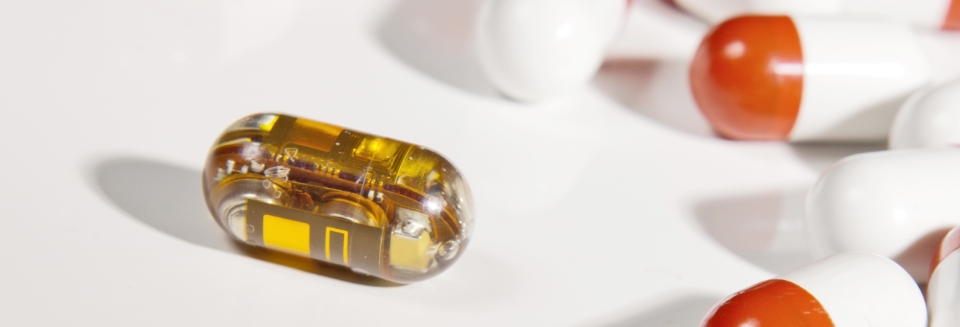
That’s where continuous or lower-touch approaches are worth considering—like AniPill® core temperature monitoring for longitudinal core trends when temperature is an important endpoint or confound.
3) Behavior/physiology differences can change what “good monitoring” means
Social behavior, cognition, impulsivity/addiction-related behaviors—these differences influence model choice. They also influence how much your workflow itself can contaminate the signal.
What changes in your setup
- If your endpoint is behavioral/cognitive: reduce handling stress and environmental variability.
- If your endpoint is physiologic: increase monitoring density where drift can invalidate comparisons (temperature, respiration, oxygenation).
Why you should care
If you care about subtle differences, you can’t tolerate sloppy setup differences. That’s not “overkill.” That’s basic experimental hygiene.
Temperature is the biggest workflow difference
If you’ve ever had a day where “the mice just recovered slower” or “today’s data looks noisier,” temperature is often the uninvited guest.
Core vs surface temperature: you need both (because they answer different questions)
- Core temperature = true thermal status (most important under anesthesia and for physiologic stability)
- Surface temperature = fast trend signal (most useful for triage and recovery workflows)
If you only track surface, you can miss core drift.
If you only track core, you can miss rapid heat loss patterns and setup problems.
What this means in practice
- Use continuous core trends when temperature is biology (or when handling itself is a confound): AniPill®.
- Use feedback-controlled warming to prevent drift during procedures: RightTemp® and RightTemp® Jr.
- Use fast surface checks for recovery triage: Non-Contact Infrared Thermometer with Laser Sight.
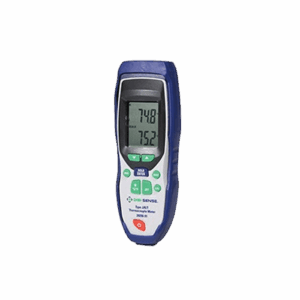
- Use probe-based core confirmation when you need direct core readings during procedures: Type JKT Thermocouple Meter.
Anesthesia delivery: what changes: mice vs rats
Anesthesia is where “small differences” become big consequences—especially in mice.
What tends to happen
- Mice: drift earlier and faster (temperature and respiration), more sensitive to leaks, more sensitive to variability in induction timing.
- Rats: more forgiving, easier physical access, but still susceptible to slow drift—especially in longer procedures.
What to change in practice (mice vs rats)
Mask fit + leaks
- In mice, small leaks matter more; ensure fit and a consistent setup.
- In rats, fit still matters, but the workflow is often less fragile.
Timing
- Standardize induction and recovery steps so you’re not “doing it differently every time.”
- Particularly important for mice because variability shows up quickly.
Monitoring cadence
- Don’t wait until the animal looks unstable.
- In mice, build checks earlier in the procedure window.
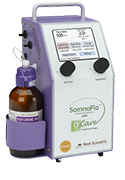
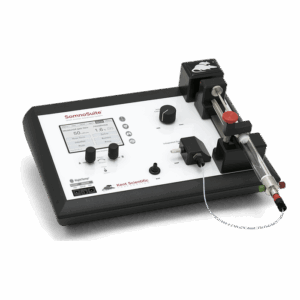
If you’re building or upgrading your rodent anesthesia workflow, start at Kent’s anesthesia options: SomnoFlo®, SomnoFlo® O2Care, and SomnoSuite®.
If you tell us species + procedure length + throughput, we can recommend a setup that’s stable without turning your protocol into a gear parade. Talk to a product specialist
Warming control: it’s more than monitoring
This is where most temperature plans fall apart. They measure drift instead of preventing it.
What “warming” has to do with monitoring
- Monitoring tells you what’s happening.
- Warming control prevents the drift that creates instability and variability.
What changes between mice vs rats
- Mice: need earlier, more consistent warming control because they lose heat quickly.
- Rats: can still drift in long procedures; control is still worth it, just sometimes less urgent.
If you’re currently using “set-and-hope” warming, you’re not alone. But if you’re seeing variability, this is one of the cleanest fixes you can make. Compare RightTemp options
- For feedback-controlled warming workflows: RightTemp®.
- For a smaller-format rodent setup built for common workflows: RightTemp® Jr.
Ventilation: when it matters, it matters a lot
Not every rodent protocol requires ventilation. But if you’re doing longer procedures, deeper anesthesia, or you need tight respiratory control, ventilation stops being optional.
Mice vs rats considerations
- Mice: small leaks and tiny changes can matter more; drift shows up faster.
- Rats: easier physical management, but longer procedures can still accumulate drift.
Practical “when you should care” triggers
Consider ventilation support when:
- procedure duration is long enough that drift is likely
- you’re pushing deeper anesthesia levels
- your endpoint is physiologic, respiratory, or sensitive to oxygenation/CO₂ balance
Physiological monitoring: pick the minimum that protects stability and data quality
The right monitoring setup depends on what you’re trying to protect:
- welfare + consistent recovery
- physiologic endpoints
- surgical stability
- operator-to-operator consistency
What changes between mice and rats
- Mice often benefit from monitoring approaches that minimize handling and reduce workflow friction.
- Rats may allow more direct measurement with less stress response, but consistency still matters.
Practical setup recipes for labs: mice vs rats
Recipe A: Mouse anesthesia + procedure workflow (high sensitivity)
Goal: prevent early drift, keep recovery consistent, reduce operator variability.
Do this
- Use feedback-controlled warming during procedures: RightTemp® or RightTemp® Jr.
- Confirm core temperature during procedures using probe-based reads: Type JKT Thermocouple Meter.
- Use fast surface trend checks during recovery: Non-Contact Infrared Thermometer with Laser Sight.
- If temperature trends outside procedure windows matter, add continuous core trending: AniPill®.
Why it works
This is “control + confirm + trend.” It’s stable and repeatable, which is the whole point.
Want the simplest stable stack for your lab? Contact a specialist to get a workflow recommendation.
Recipe B: Rat anesthesia + procedure workflow (more forgiving, still needs consistency)
Goal: stable anesthesia without overcomplicating the day.
Do this
- Use consistent warming control: RightTemp® / RightTemp® Jr. depending on your station layout.
- Use core confirmation at appropriate intervals: Type JKT Thermocouple Meter.
- Use surface checks during recovery for fast triage: Non-Contact Infrared Thermometer.
Why it works
Rats forgive more, but your study still benefits from repeatability.
Recipe C: High-throughput recovery (mouse or rat)
Goal: fast screening + escalation without turning recovery into a bottleneck.
Do this
- Triage with surface trend checks: Non-Contact Infrared Thermometer.
- Escalate to core confirmation when needed: Type JKT Thermocouple Meter.
- Keep warming consistent across stations: RightTemp® / RightTemp® Jr.
Recipe D: Free-moving / longitudinal work (temperature trends matter)
Goal: capture real trends without repeated handling becoming the confound.
Do this
- Use continuous core trends: AniPill®.
- Use occasional surface checks for sanity checks: Non-Contact IR Thermometer.
- Document ambient conditions so the data is interpretable and defensible.
Common mistakes that make people think rodent temperature monitoring “doesn’t work”
- Treating surface temperature like a proxy for core (IR is a trend tool, not a core substitute)
- Measuring core after instability has already started (especially in mouse anesthesia workflows)
- Warming without feedback (or monitoring without control) — drift is predictable, so prevent it
- Ignoring ambient factors like drafts, pad placement, and recovery station layout
- Building a protocol no one can execute consistently (fragile workflows = hidden variables)
Decision guide: what you need
- If the animal is anesthetized: warming control + core confirmation are not optional
- If your procedures are high throughput: surface checks first, core confirmation when needed
- If temperature is an endpoint/confound: continuous core trends win → AniPill®
- If you want fewer surprises: stop relying on “looks fine,” standardize the workflow
- If ventilation variables matter: consider RoVent® / RoVent® Jr.
Wrapping up the mice vs rats conversation
Most labs end up needing the same foundational capabilities—scaled and tuned for mice vs rats work:
- consistent anesthesia delivery (SomnoFlo®, SomnoFlo® O2Care, SomnoSuite®)
- warming control that prevents drift (RightTemp®, RightTemp® Jr.)
- temperature monitoring that covers core + surface jobs (AniPill®, Non-Contact IR Thermometer, Type JKT Thermocouple Meter)
- ventilation support when the protocol demands it (RoVent®, RoVent® Jr.)
- physiologic monitoring such as pulse oximetry when stability/data quality depends on it (PhysioSuite®, MouseSTAT® Jr.)
Want a recommendation that fits your protocol?
Tell us mouse vs rat, procedure type, typical duration, awake vs anesthetized, and animals per session.
We’ll suggest a practical setup for anesthesia + warming + monitoring that you can run consistently.
Building or upgrading your anesthesia station?
See Kent’s anesthesia systems and accessories—from induction to delivery and scavenging—so you can choose the right configuration for your lab.
For further reading
NIH OLAW IACUC overview:
https://olaw.nih.gov/resources/tutorial/iacuc.htm
ILAR Journal article used in your draft:
https://academic.oup.com/ilarjournal/article/62/1-2/238/6299201
Open-access article from your draft (PMC):
https://pmc.ncbi.nlm.nih.gov/articles/PMC11193424/
Mice vs Rats FAQs
Do mice get hypothermic faster than rats under anesthesia?
Yes—typically. Mice have less thermal mass and a higher surface-area-to-volume ratio, so they lose heat faster, and anesthesia blunts thermoregulation. Translation: mice drift sooner, and you have less time to “notice and fix it.”
Is IR temperature accurate for core temperature?
No. IR is a surface temperature tool. It’s great for fast trend/triage checks (especially in recovery), but it’s not a reliable proxy for core temperature in any species.
When do I need continuous core temperature monitoring in rodents?
Use continuous core monitoring when temperature is an endpoint (fever, thermoregulation, metabolism, circadian patterns), repeated handling would be a confound, you need trend integrity over hours/days, or you’re troubleshooting unexplained variability.
What’s the simplest temperature monitoring setup for rodent surgery (mouse or rat)?
Minimum viable setup: feedback-controlled warming during the procedure, core confirmation early + at intervals (probe/thermocouple), and fast surface checks in recovery (IR) to catch heat loss trends. Mice usually need tighter discipline; rats give you a bit more margin, but the workflow is the same.
Do I need ventilation for rodent anesthesia (mice vs rats)?
Not always. Consider ventilation if procedures are long, anesthesia is deep, you need tight control of respiratory variables, or you’re seeing inconsistent oxygenation/respiration or recoveries. Species matters less than duration and depth—mice typically show drift sooner.
How do I reduce handling stress while still monitoring temperature?
Reduce how often you need to touch the animal (use continuous core when appropriate), use surface IR for quick triage instead of repeated restraint, standardize handling technique (tunnels can help), and build a workflow where monitoring is fast and consistent.