

















Lab equipment and instrument training
Sam Wohlfeil2026-08-24T16:46:59+00:00
Lab equipment and instrument training
Get the full precision your Kent systems were built to deliver.
Your Somno anesthesia and CODA® blood pressure systems are engineered for accurate, reproducible data. Kent Scientific training gives your graduate students, postdocs, and technicians the skill to draw all of it — taught by the people who design and build the equipment.
Tell us what your lab runs, and we’ll help you plan a session around your systems, your protocols, and your team.
Every lab has a version of the same story
A cautionary tale
A postdoc sets up a CODA run the way she was shown by the student who left last spring. The pressures look reasonable. Three months later the data won’t hold together across cohorts, and no one can point to where it went sideways — the cuff timing, the animal’s acclimation, the warming, the restraint. On paper the study holds. In practice, it can’t be repeated. And data that can’t be repeated doesn’t survive review.
That’s never the equipment. Kent systems are engineered to be precise. What varies from lab to lab is technique — the one thing most teams never get dedicated time to master, even with a great system in front of them.
Your systems are built to be precise. Training is how your team turns that precision into results, every run.

Learn it from the people who engineered it
No one understands a Somno or a CODA system better than the team that designed, built, and calibrated it.
Kent training isn’t a video or a quick-start card. It’s hands-on time with your actual systems, your actual protocols, and a Kent specialist who can answer the question behind the question — why the reading moved, what the system is doing, and how to get the same result tomorrow, and the day after that.
What’s riding on the technique
Skilled anesthesia keeps the animal safe and the readout clean. A well-run tail-cuff protocol gives you blood pressure you can defend across cohorts. Get those right and you protect the work; leave them to trial and error and you risk a cohort of animals, months at the bench, and a slice of a grant you don’t get back. Set against that, the cost of training is a rounding error.
There’s a second payoff that’s easy to overlook. Kent anesthesia is designed to keep isoflurane exposure low, using far less agent than a traditional vaporizer. Training makes sure your team sets up and scavenges to capture that full benefit — so the agent stays in the system and out of the room, and the people at the bench stay comfortable and safe.
Why Kent equipment rewards real training
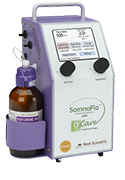
Kent anesthesia is a step ahead of the vaporizer your team may have trained on somewhere else. A traditional vaporizer bubbles carrier gas through liquid isoflurane. SomnoFlo® vaporizes it electronically, on demand, using a fraction of the agent — which is exactly why it’s more precise and safer. That advance also means the old habits don’t map onto it one-for-one. A short session retunes those instincts, so your team runs the system the way it was designed to run and gets everything the engineering delivers.
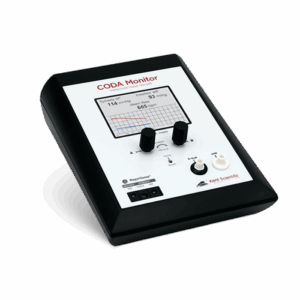
CODA is where training pays off fastest. Noninvasive tail-cuff blood pressure lets you collect clean, publishable data without a catheter — a real advantage — and a little technique is what makes that repeatable across every person in the lab. Acclimation, warming, cuff sizing and placement, restraint, the cycles you keep, and the ones you set aside all shape the result. A focused session turns those details into second nature, so everyone on your team pulls the same quality of data CODA is built to give.
What your team walks away with
- Setup and daily operation done the way the system was engineered to run
- Anesthesia depth and monitoring that protect the animal and the data at the same time
- CODA protocols you can defend in review — acclimation, cuff placement, warming, and clean cycles
- Handling and scavenging that keep isoflurane exposure down for everyone in the room
- A shared standard the whole lab works from, so results don’t depend on who’s at the bench that day
-
We build the session around your lab. Tell us what you run and what you’re trying to
measure, and we’ll shape the training to fit.
Who should be in the room
- Undergraduate and graduate students, postdocs, and technicians running studies day to day
- New hires and researchers learning an existing workflow or working with a Kent system for the first time
- Lab managers, animal facility managers, and core facility managers responsible for consistency across users
- Trainers and experienced users responsible for onboarding and educating new team members
- Principal investigators overseeing protocols, study quality, and reproducibility
- Experienced researchers sharpening technique or adopting a new system
- Any lab where the person who “just knew the system” has moved on
- In most labs the real expert graduates every few years. Training is how the knowledge stays.
- Better technique is better science — and more humane science
Refinement is one of the three Rs for a reason. An animal that’s anesthetized correctly suffers less and gives you cleaner data, and those two goals pull in the same direction rather than against each other. That’s the whole idea behind The Care of Science: skilled hands are kinder hands, and they produce work you can stand behind. Your team practices it every time they run a system well.
- If your team has already “figured it out”
That’s usually the moment worth a second look. When no one’s had a reason to check technique in a while, it tends to drift the most — each person teaching the next a slightly different version of the protocol. A session resets the whole lab to one standard, and gives your most experienced people a place to pressure-test the habits they’ve built.

Give your team the training the work deserves
Your systems already do their part. Give the people running them the skill to match. Tell us about your lab, and we’ll help you plan a session built around your equipment, your protocols, and your team.
Not ready to talk yet? Download the training overview to see exactly what a session covers.
Frequently asked questions
Which systems do you train on?
Somno anesthesia systems and CODA noninvasive blood pressure, along with how they fit the rest of your workflow. We’ll confirm the exact scope with you before the session.
Who should attend?
Anyone who uses, oversees, or trains others on the equipment — including undergraduate and graduate students, postdocs, technicians, researchers, lab managers, animal facility and core managers, trainers, and principal investigators. Send everyone who touches the systems, so the whole lab works from one standard.
Where does training take place?
At your lab, on your own systems. We coordinate a session when a Kent specialist can be in your area.
How long does it take?
It depends on your systems and how many people attend. We’ll scope it with you so the time is well spent and nothing important gets rushed.
We’ve used these systems for years — do we still need it?
Often that’s exactly when technique has drifted the most, because no one’s had a reason to check it. A refresher resets the team to one standard and tends to surface a few habits worth correcting.
What does it cost?
We’ll walk through pricing when we scope the session, since it depends on your systems, your team size, and your location. Reach out and we’ll give you a clear picture quickly.