Rat Blood Pressure Mouse Blood Pressure - Kent Scientific Corporation
YOUR ACCOUNT
YOUR CART IS CURRENTLY EMPTY
ProductsPromotionsClearanceEventsResourcesAbout UsHomeSite MapContact
Rat Blood Pressure Mouse Blood Pressure - Kent Scientific Corporation
Non-Invasive Blood Pressure
Respiratory
Syringe Pumps
FirstHand Surgical Instruments
Animal Warming
Animal Identification
Animal Handling
Physiology
Access and Infusion
Isolated Organ and Tissue
Neuroscience
General Lab
Books & CD's
Clearance - Updated 8/30/10
Request Sales Support
Sign up for our Newsletter
Request a Brochure
Watch Our Video:
Measuring Blood Pressure in Mice
Upcoming Tradeshows
Canadian Cardiovascular Congress
Booth # 1318
October 23rd - 27th
Montreal, QC
» More Info
Neuroscience 2010
Booth # 1732
November 13th - 17th
San Diego, CA
» More Info
Ventilators
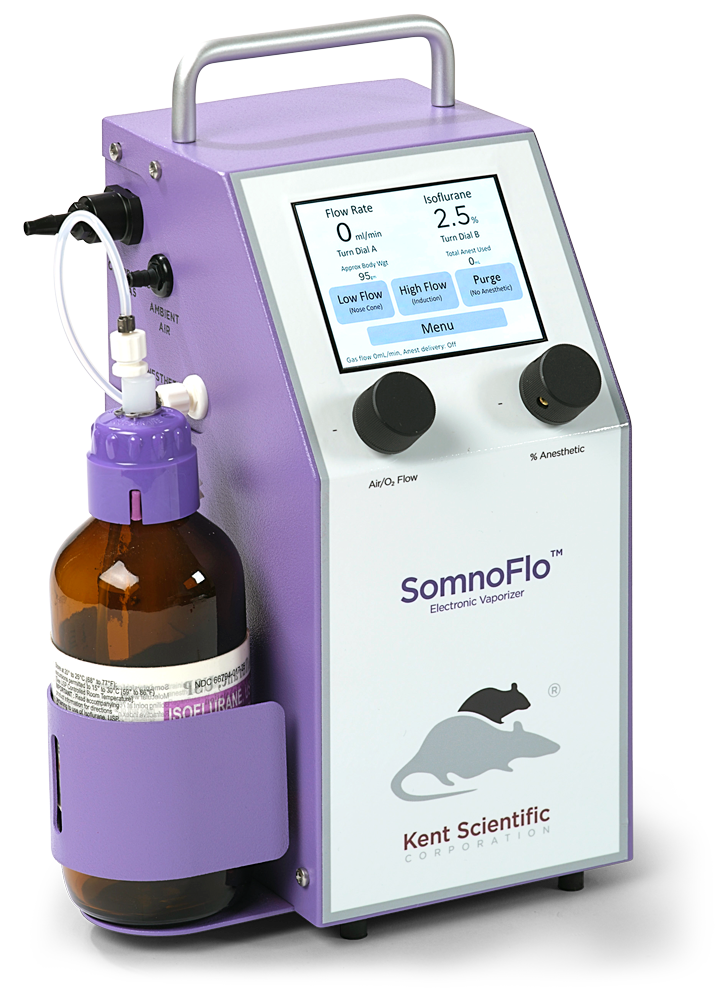
Vaporizers - Isoflurane & Sevoflurane
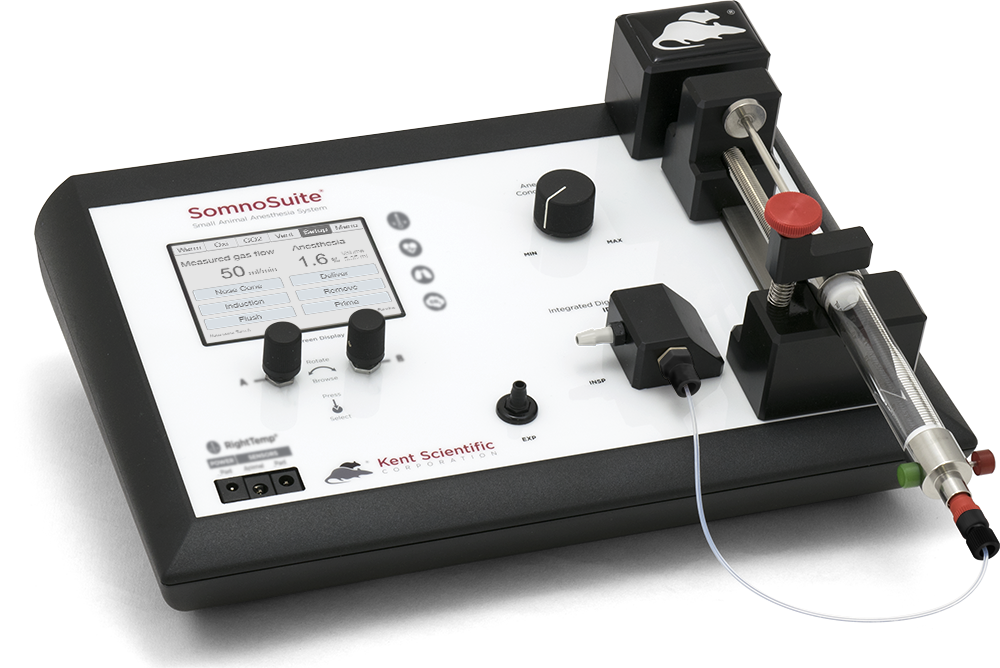
Anesthesia Products
Tracheal Cannulae
Aerosol Nebulizers
CO2 Monitoring - NEW
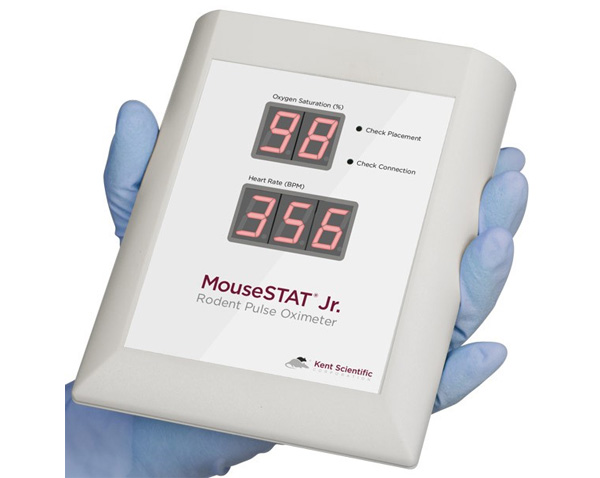
SpO2 Monitoring - NEW
O2 Monitoring
About Respiration/Ventilation

About Respiration, Ventilation and Anesthesia

Respiratory - About Respiration/Ventilation - About Respiration, Ventilation and Anesthesia for Laboratory Rats and Mice

About Ventilation

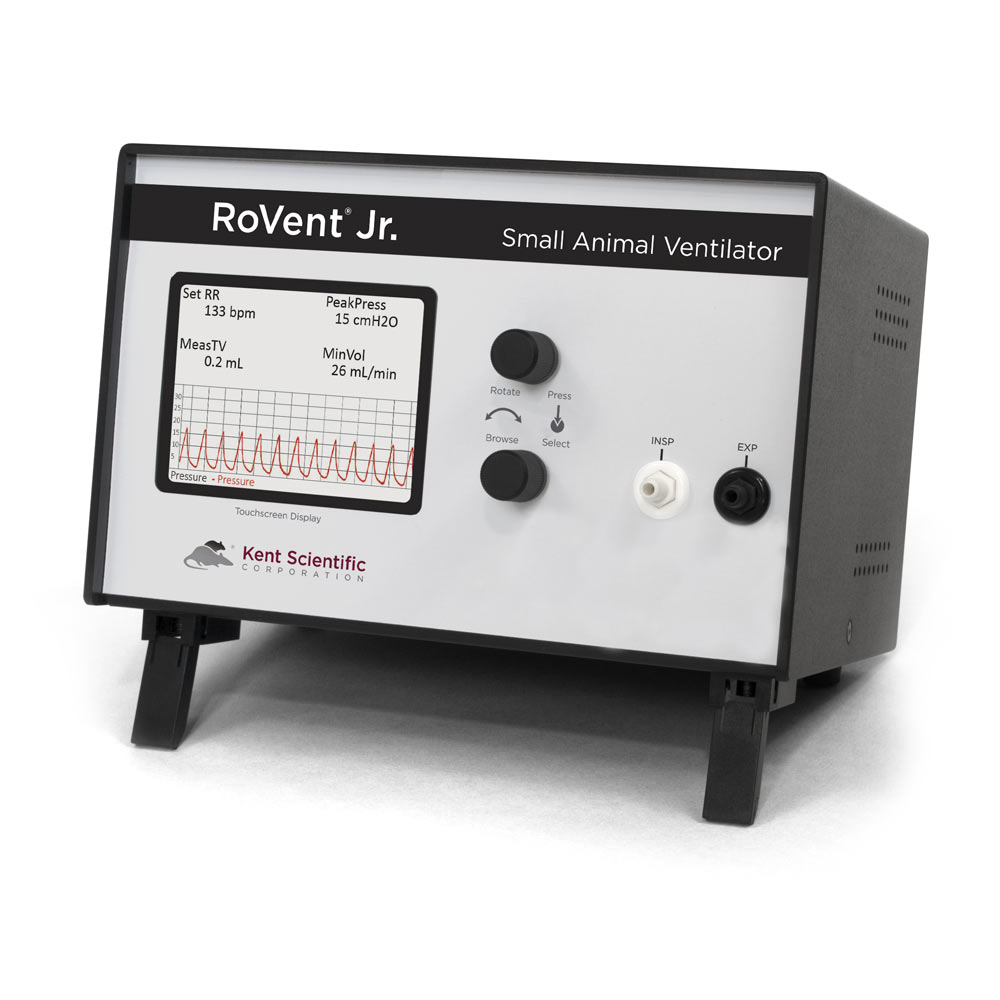
Pressure controlled ventilators deliver a constant flow of inspiratory gas at the onset of the inspiration portion of the respiratory cycle. Gas deliver continues until reaching the inspiratory pressure threshold. Pressure in the airways and lungs are now maintained until the end of the inspiratory cycle. At this time, there is no gas flow (inspiratory pause).

Volume controlled ventilation maintains constant inspiratory volume and allows the inspiratory pressure to vary dynamically with the tidal volume of the subject.

Volume controlled ventilators deliver inspiratory gases at a constant flow for the entire period of the inspiratory portion of the respiratory cycle. The final airway pressure will be determined by the tidal volume of the subject and the connecting tubing. Care is required to avoid over pressurizing the lungs with an excessive volume of gas.

In the expiratory portion of the respiratory cycle, gases in the lungs are released through the expiratory tubing. The lungs are now at atmospheric pressure. During certain procedures, Peak End Expiratory Pressure (PEEP) is required to prevent the lungs from collapsing. PEEP is easily accomplished by venting the expiratory tubing through a column of water. The end of the tubing is placed under the surface of the water, at the required distance, to generate the desired PEEP.

In the respiratory cycle, the inspiratory portion is typically one third of the cycle and the expiratory portion is two thirds of the cycle. Each value can be independently adjusted to meet your research needs.

Your specific application will determine which type of ventilator is best suited for your research. Kent Scientific offers the TOPO™ ventilator which has the capability to operate in both volume controlled and pressure controlled modes. With the TOPO’s™ dualmode capability, there is no need to purchase two ventilators.


About Anesthesia and Anesthetics

Anesthesia is the controllable and reversible loss of consciousness induced by chemical intoxication of the central nervous system. The goal of anesthetic administration is to prevent the perception of painful stimuli without undue depression of physiological functions.

Characteristic features of the anesthetic state include lowered sensitivity to outside stimuli (including pain), relaxation, and diminished motor response.

Isoflurane: (Forane, 1-chloro-2,2,2-trifluoroethyldifluoromethyl ether) Halogenated ether that is clear, colorless,  volatile liquid at standard temperature and pressure. It has a mild, ether-like odor and a molecular weight of 184.5.

Sevoflurane: (2,2,2-trifluoro-1-(trifluoromethyl) ethyl ether) Halogenated ether that is a sweet smelling, non-flammable fully fluorinated methyl isopropyl ether and has a molecular weight of 200.

In general, the safest anesthetics are inhalants if used with the proper delivery and scavenging systems. The most commonly used, currently available inhalant anesthetics are isoflurane and sevoflurane. Sevoflurane and isoflurane both have applications in animal research due to their rapid onset and offset with minimal side effects.

Isoflurane and sevoflurane are the currently recommended inhalant anesthetics. Both of these agents require a precision vaporizer for delivery to the animal. Induction in mice or rats with these agents must be conducted in an induction chamber, where concentration is restricted to 5 percent. These are very rapid acting inhalant anesthetics, and death can result if the animal is not observed closely or the concentration is too high. An advantage of these agents is that they are not metabolized and therefore have little or no toxic effects. Also, they are relatively insoluble in blood, and therefore are “blown-off ” quickly, providing a quick recovery. Isoflurane and sevoflurane while very similar, have slightly different effects and mechanisms of action, even though the anesthetic result is nearly identical.

For safety, waste gas scavenging systems are required when using these agents. Precision vaporizers provide precise, controlled levels of anesthesia administered to the patient, providing a margin of safety to the animal. Using gas anesthetics at full concentration out of the bottle quickly results in overdosing the animal, and can kill very quickly.

Precision vaporizers are part of an anesthesia machine and serve to mix oxygen with the anesthetic in a precisely-controlled concentration. Animal researchers who routinely incorporate surgery or the use of anesthetics in their animal experiments should consider purchasing an anesthesia machine. We carry single and multiple channel complete anesthesia systems as well a choice of new and remanufactured vaporizers to select from.


Small Animal Intubation Kit


Back to Top American Express, Visa, Mastercard, Discover     SSL

Rat Blood Pressure Mouse Blood Pressure - Kent Scientific Corporation Rat Blood Pressure Mouse Blood Pressure - Kent Scientific Corporation Rat Blood Pressure, Mouse Blood Pressure - Kent Scientific
Rat Blood Pressure, Mouse Blood Pressure - Kent Scientific